Heads up: some links on this page are affiliate links. If you buy through one we may earn a commission at no extra cost to you. It never changes a ranking, and we accept no payment for placement. The full version.
Thermally, cast iron is carbon steel
Gray cast iron publishes a thermal conductivity of 46 W/m.K against carbon steel's 50, a specific heat capacity of 490 J/kg.K against 470, and a density of 7.5 g/cm3 against 7.9. Multiply those out and the two land almost on top of each other.
Cordierite
Gray cast iron
Carbon steel
Conductivity, W/m.K
1.3-1.7
46
50
Volumetric heat capacity, MJ/m3.K
1.73
3.68
3.71
Effusivity, W.s^0.5/m2.K
1,612
13,002
13,625
Effusivity vs cordierite
1.0x
8.1x
8.5x
95%
Cast iron's thermal effusivity as a share of carbon steel's
13,002 against 13,625. On the number that decides bottom crust, cast iron and a baking steel are the same product with different marketing.
So on crust, cast iron beats a stone by essentially the same margin a baking steel does. The 15-inch Lodge pizza pan is 9.91 published pounds and reaches 95 percent of oven temperature in about 23 minutes - the fastest of any surface on this site, because it is both dense and comparatively light.
The real argument, and it is not thermal
It is the rim. A pizza pan has a raised edge and two handles; a baking steel and a stone are flat plates you can slide a base onto from a peel. That difference changes the whole workflow.
With cast iron you either build the pizza on the cold pan and put it in the oven with the pizza already on it - which forfeits most of the preheat benefit and is the mistake almost everyone makes first - or you preheat the pan empty and then drop a dressed base into a 500 F dish with a rim in your way. The second works. It is fiddly, and it caps you at roughly a pizza an inch smaller than the pan.
The upside is equally real. It has handles, so getting it out is a normal kitchen action rather than a two-oven-glove event. It costs a fraction of what a steel of similar thermal capability costs. And most households already own a large cast iron skillet, which means the experiment is free.
The test that costs nothing: preheat the cast iron you already own for 25 minutes and bake a 10-inch pizza on it. If the base transforms, the surface was your problem.
What each is actually for
Cast iron pan: pan pizza, Detroit and Sicilian styles, deep dish, and anyone testing whether a surface upgrade would help before spending on a steel. The rim is a feature for those styles rather than an obstacle.
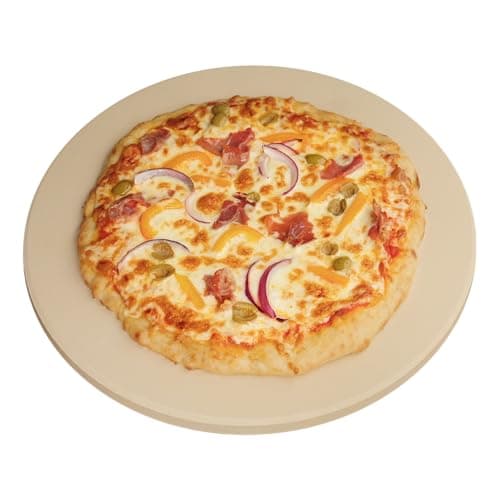
Stone: peel-launched round pizza, bread, and anyone who does not want to maintain seasoning or lift much.
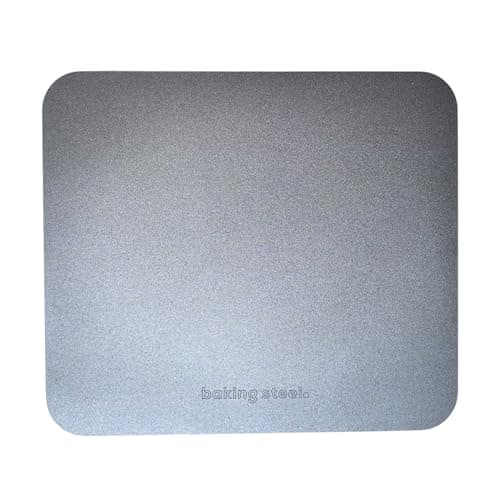
Baking steel: peel-launched round pizza where the base is the specific complaint, and you want cast iron's physics with a stone's flat geometry. The two metals are set against each other directly in cast iron versus pizza steel.
The cheapest useful experiment in home pizza
Before you buy anything: preheat the biggest cast iron pan you own on the middle rack for 25 minutes at your oven's maximum, and bake a small pizza on it. If the base comes out transformed, your problem was the surface and a steel will fix it properly. If the base is about the same, your problem is somewhere else - most likely the oven temperature or the length of the preheat, both of which are covered in the preheat guide. That test costs nothing and it has saved more money than anything else on this site.
The picks
What we would buy
Lodge
Lodge 15-Inch Cast Iron Pizza Pan
Cast iron sits within about 5 percent of carbon steel on every thermal number that matters, costs a fraction of a steel, and has handles. The catch is that this is a pan with a rim, not a flat plate you can slide a pizza onto.
#ad We hold no verified live price for this product, so we show none. How this site is funded.
Old Stone
Old Stone 16-Inch Round Cordierite Pizza Stone
The most useful stone shape for a home oven, at a weight one hand can manage, and one of the very few whose retailer publishes both a thickness and a weight.
A quarter inch is the thickness where a steel stops being a novelty and stays a thing you can still lift. Its advantage over a stone is not preheat speed - it is what happens one second after the base lands.
Thermally, within about 5 percent - effusivity 13,002 against 13,625. The difference that matters is geometry: a pan has a rim and a steel does not, so launching from a peel is far easier on the steel.
Should I preheat the cast iron pan empty?+
Yes. Building the pizza on a cold pan and putting both in together throws away the whole point, because the base spends the first ten minutes warming up with the pan instead of setting on a hot surface.
Will a stone or cast iron work better for deep dish?+
Cast iron, comfortably, because deep dish wants a vessel with sides and a long steady bake. A stone can support a deep-dish pan from below, which is a different and also useful job.
Does cast iron need seasoning for pizza?+
Yes, the same as any other cast iron use. Most pans ship pre-seasoned. Dry it thoroughly after washing and wipe on a very thin film of oil.
Sources
Every number on this page came from one of these, or from arithmetic on one of these that we showed in full.