Three numbers, not one
When people say a steel is "better" than a stone they are usually collapsing three separate physical properties into one figure. They are not the same, and they do not have the same ratio.
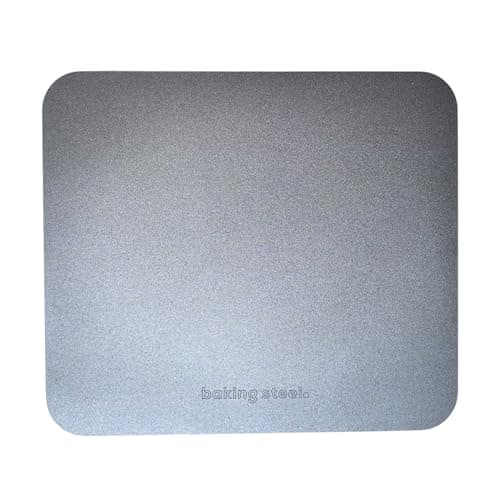
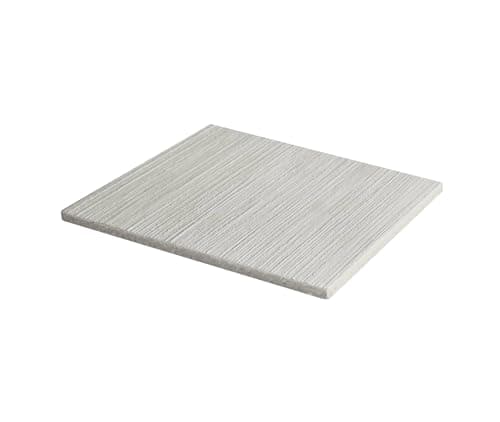
Thermal conductivity is how fast heat travels through a material. Published figures: carbon steel 50 W/m.K, cordierite 1.3 to 1.7 W/m.K. That is a ratio of roughly 30 to 38 times. Volumetric heat capacity is how much energy a given volume holds per degree. Steel comes out at 3.71 MJ/m3.K against cordierite's 1.73 - a ratio of 2.1 times, not thirty. And thermal effusivity, the square root of conductivity times volumetric heat capacity, is the one that actually governs how hot the contact patch stays when a cool wet base lands on a hot surface. There the ratio is 8.5 times.
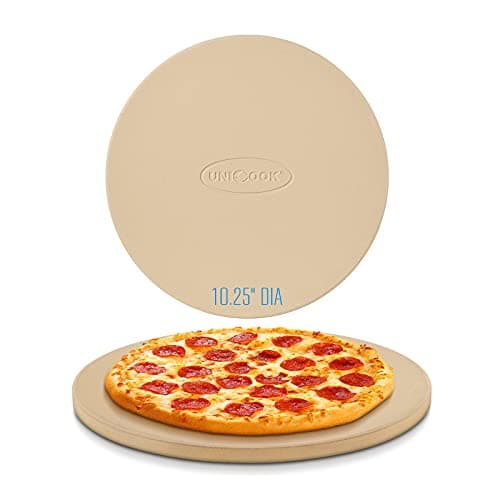
Effusivity is the number that matters for crust, and it is the one nobody quotes. It is also why a steel and a stone can hold almost the same total energy - a 16 by 14 inch quarter-inch steel and a 16-inch cordierite round are within about 15 percent of each other on stored kilowatt-hours - and still produce visibly different bases.
Preheat is about mass, not conductivity
The other thing the marketing gets backwards. Run the Biot number for any of these plates and it lands at or below 0.1, which means heat crosses the surface far more slowly than it travels inside. Internal conduction is not the bottleneck. Mass is.
Work the lumped-capacitance model through and a 7.3 lb cordierite round reaches 95 percent of oven temperature in about 25 minutes; a 15 lb quarter-inch steel takes about 27; a 27 lb three-eighths steel takes about 42. The steel is not faster to preheat. It is heavier, so it is slightly slower - and Baking Steel's own published guidance of 45 to 60 minutes agrees with our model for their plate, which is the closest thing to validation we can offer for a site that owns none of this equipment.
How to choose, in order
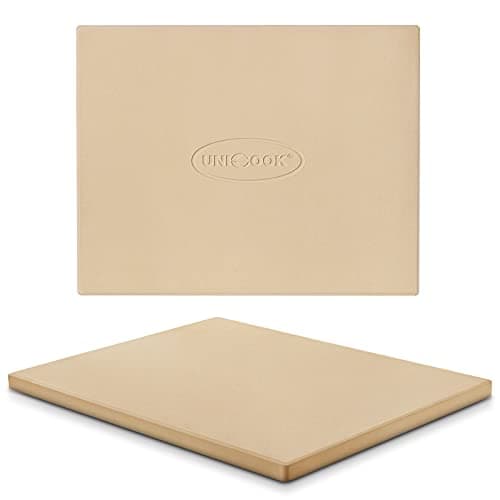
Start with your oven, not the material. Measure the rack, subtract an inch of clearance on each side, and buy the largest surface that fits. Usable area is the upgrade almost nobody makes and everybody notices - a base that overhangs the surface bakes pale at the edge no matter what the surface is made of.
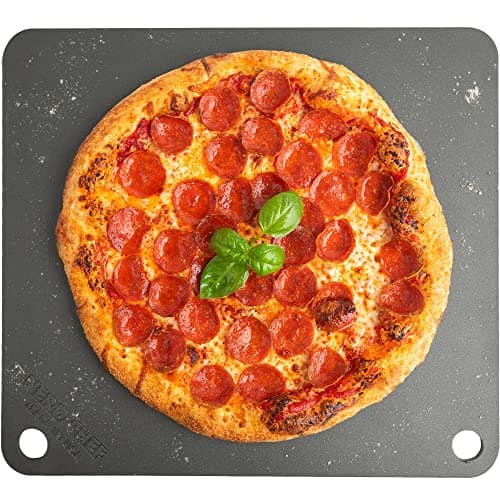
Then decide what you bake. If it is mostly pizza and you want the crispest possible base, a steel. If it is bread as much as pizza, a stone - the gentler effusivity is more forgiving with a long bake, and a stone does not need seasoning. If you want most of the steel effect for a fraction of the money, cast iron sits within about 5 percent of carbon steel on every thermal number that matters; the catch is the rim, which changes how you launch.
Then be honest about lifting. A quarter-inch steel is 15 pounds. A half-inch is 32. If a plate is heavy enough that you will not take it out to clean it, buy the lighter one - the surface you actually use beats the surface that wins on paper.
Who should not buy a steel: anyone whose oven runs below about 450 F, anyone who bakes mostly enriched or sweet doughs that scorch on a fierce base, and anyone who cannot comfortably move 15 pounds at chest height. None of those are edge cases. All three are common, and none of them are mentioned in the roundups this page is competing with.
Every figure above is worked through in full on our methodology page, with the material constants, their sources and a calculator-checkable example.