The two-peel system, and why it exists
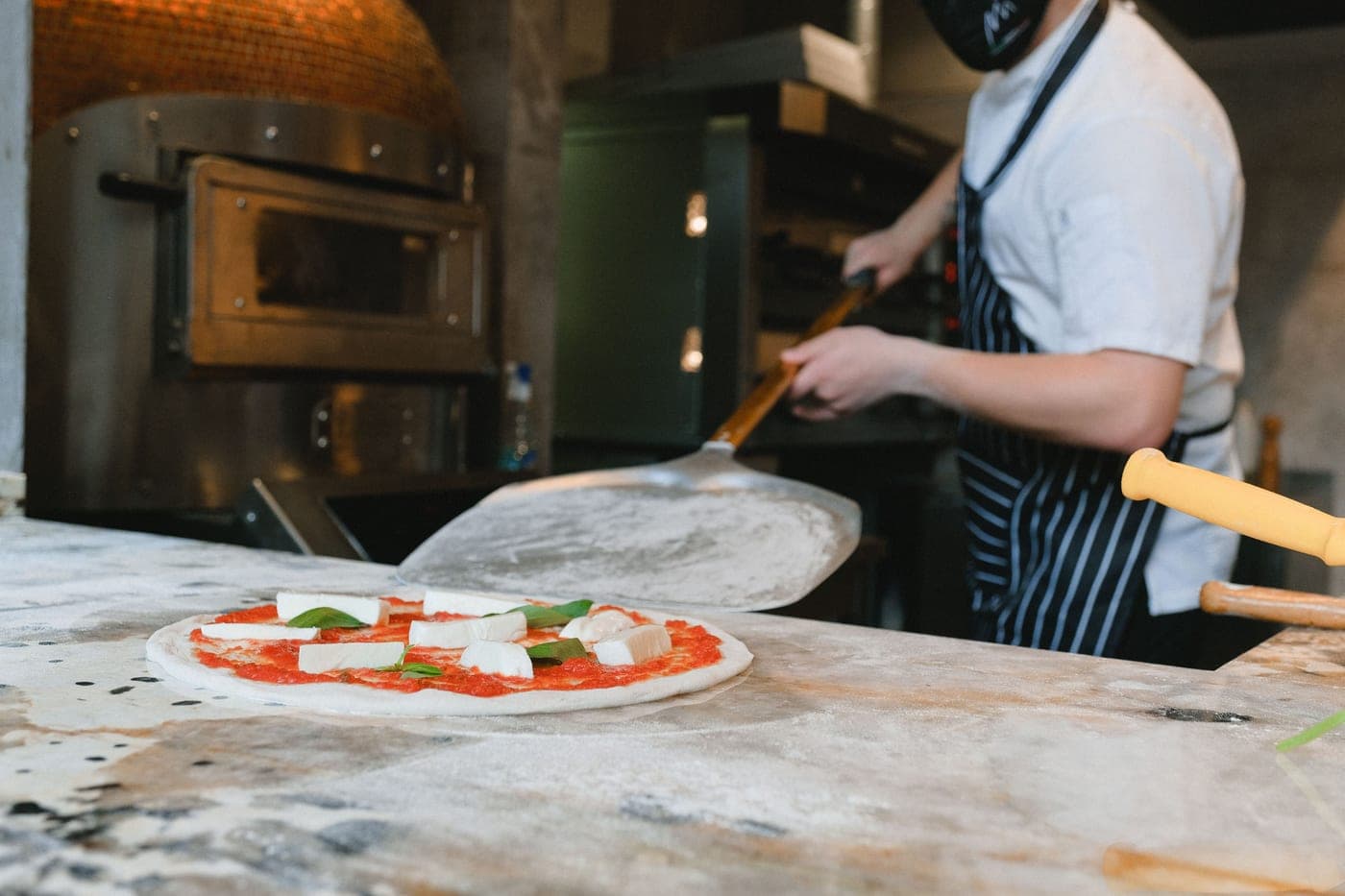
Professional kitchens use two peels for one pizza, and the reason is material science rather than tradition. Wood for launching: a wooden or wood-composite surface is porous and slightly rough, so a raw base sits on a thin layer of flour rather than making full wet contact. It buys you minutes rather than seconds before the dough welds itself down. Thin metal for retrieving and turning: a cooked base is dry and rigid, and what you need then is an edge thin enough to get underneath it. Wood cannot be made thin enough at the tip; a 1.5 mm aluminum blade can.
If you only buy one, buy a light perforated aluminum blade and change your habit instead: build the pizza fast, launch within about a minute, and keep the base moving on the peel with a small shake as you dress it. If you build slowly - and most people building a good pizza do - buy the wood one too. It is the cheaper of the two.
Sizing: the blade, the pizza and the oven mouth
Three measurements, in this order. The blade must be at least as wide as the pizza. A 14-inch base on a 12-inch blade will overhang and catch as it goes. The blade must fit through the oven mouth at an angle, which in a domestic oven is rarely a constraint and in a portable outdoor oven often is - a 9-inch turning peel plus the angle of your wrist is a lot of width through a small opening. The handle should let you reach the back of the surface without your forearm entering the oven. That is roughly 24 inches of overall length for a domestic oven and more for anything deeper.
Weight matters more than people expect. The published weights on this page run from 530 g to 2.1 lb across peels of similar size, and a heavier blade held out at arm's length with a loaded pizza on it is genuinely harder to keep level. Under a kilo is the band to aim for.
Perforated or solid
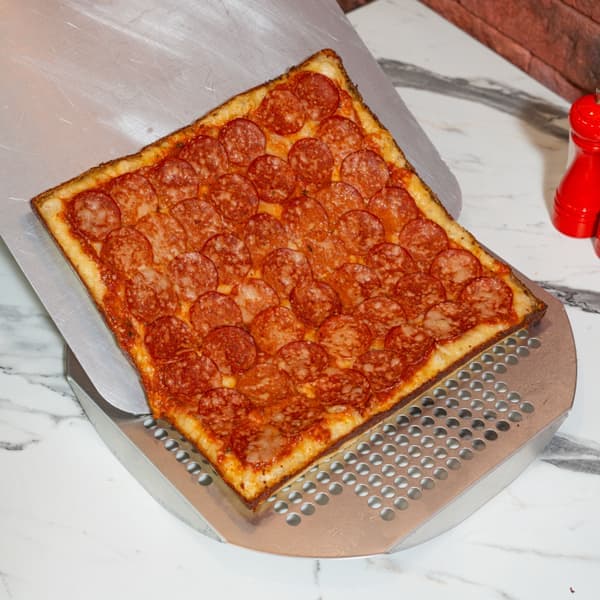
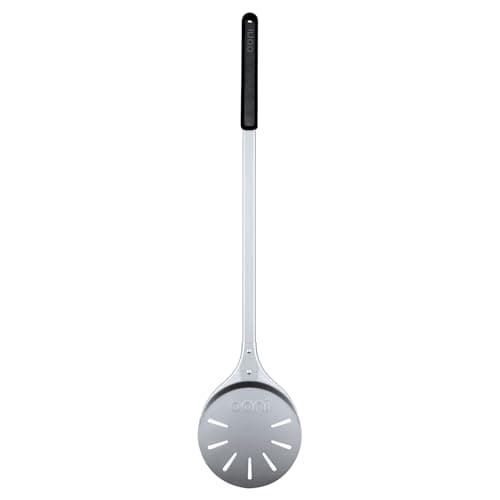
Perforations exist to shed the loose flour or semolina you launched on. That flour is what burns on the stone, smokes, and gives the kitchen the bonfire smell. A perforated blade drops most of it before the pizza leaves. The trade-off is real but small: holes catch dough scraps and want a brush, and a perforated blade is marginally less rigid under a heavily loaded 14-inch pizza.
If you are choosing one, perforated wins for launching and solid wins for retrieving, because a solid blade supports the whole cooked base while you carry it. Which is, again, an argument for two peels.
The specification nobody publishes, and the one that surprises people
Almost no peel maker publishes a temperature limit, which is odd for a tool you hold over a 500 F surface. Epicurean does: their Richlite board is rated to 350 F. That does not make it a bad peel - it makes it a transfer tool rather than an oven tool, and knowing which is which stops you leaving it resting on the stone edge while you fetch the oregano. Aluminum peel blades have a similar story: the 3003-H14 alloy most of them are pressed from has a published maximum mechanical service temperature of 360 F, which is fine for the seconds a launch takes and not fine for parking it in the oven.
Start with the launch itself if the problem is the pizza arriving folded, or the size guide if you are trying to work out which one to buy.