Rank by fridge shelf, then by dough balls per week
Measure the vertical gap between two fridge shelves before you buy anything. In most domestic fridges that gap is 8 to 10 inches. The 6-quart Cambro round that pizza forums recommend universally is 10 7/8 inches tall - it will not stand under most shelves, and the listings do not lead with that number.
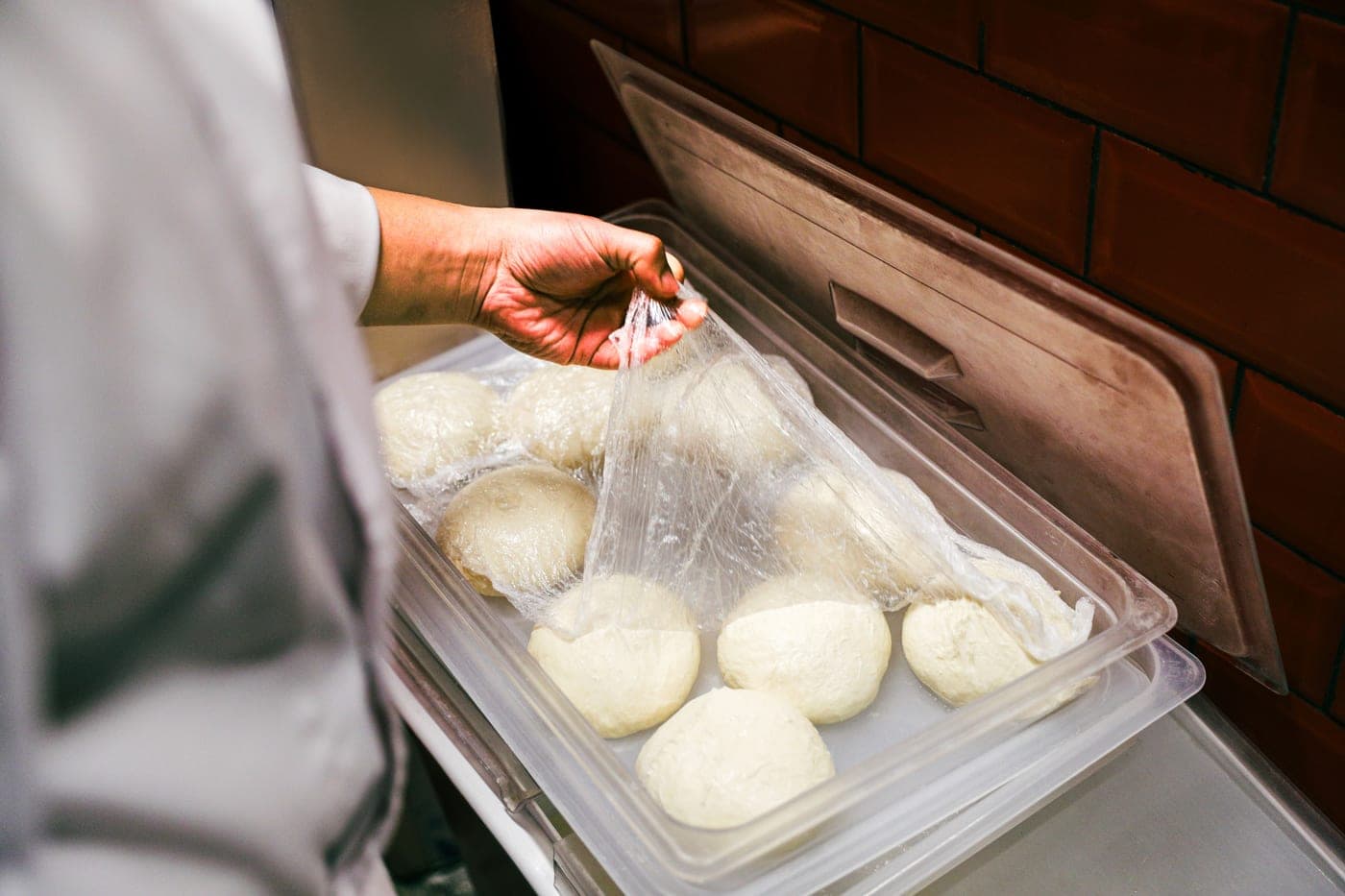
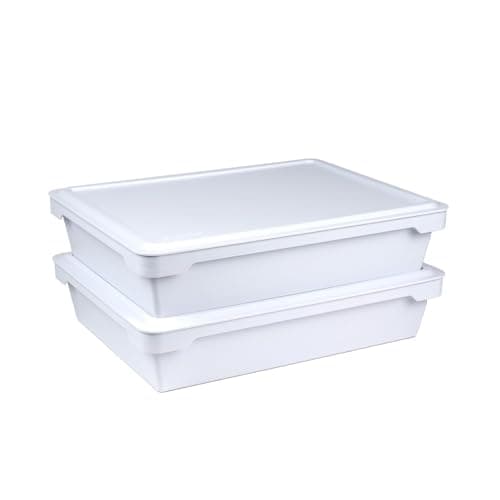
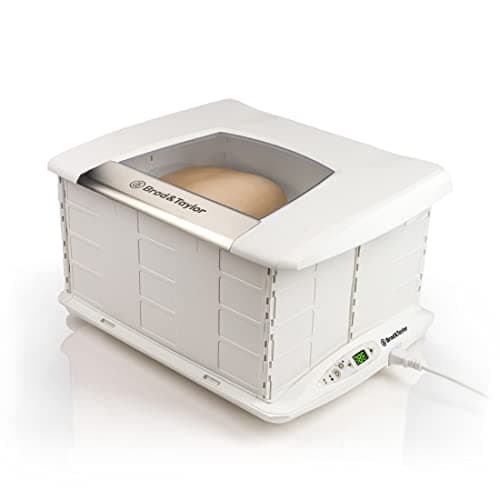
Then count your balls. One to two balls a week: individual lidded containers, one per ball, stacked. Three to six: a single shallow tray with a lid, or a stack of individual containers. More than that and you are into genuine dough-box territory, in which case measure your shelf width first and consider a garage fridge.
The height rule for individual containers
A dough ball roughly doubles in volume during a room-temperature proof, and it spreads sideways as it relaxes. A container that is tall and narrow forces the ball upward into a dome and it never relaxes into a disc; a container that is wide and shallow lets it spread the way you want. As a working rule, the container should be at least twice the height of the seated ball and at least 1.5 times its diameter across - so for a 280 g ball that seats to about 4 inches across and 1.5 inches tall, you want something around 6 inches across and 3 inches deep.
A scale is only precise for half your recipe
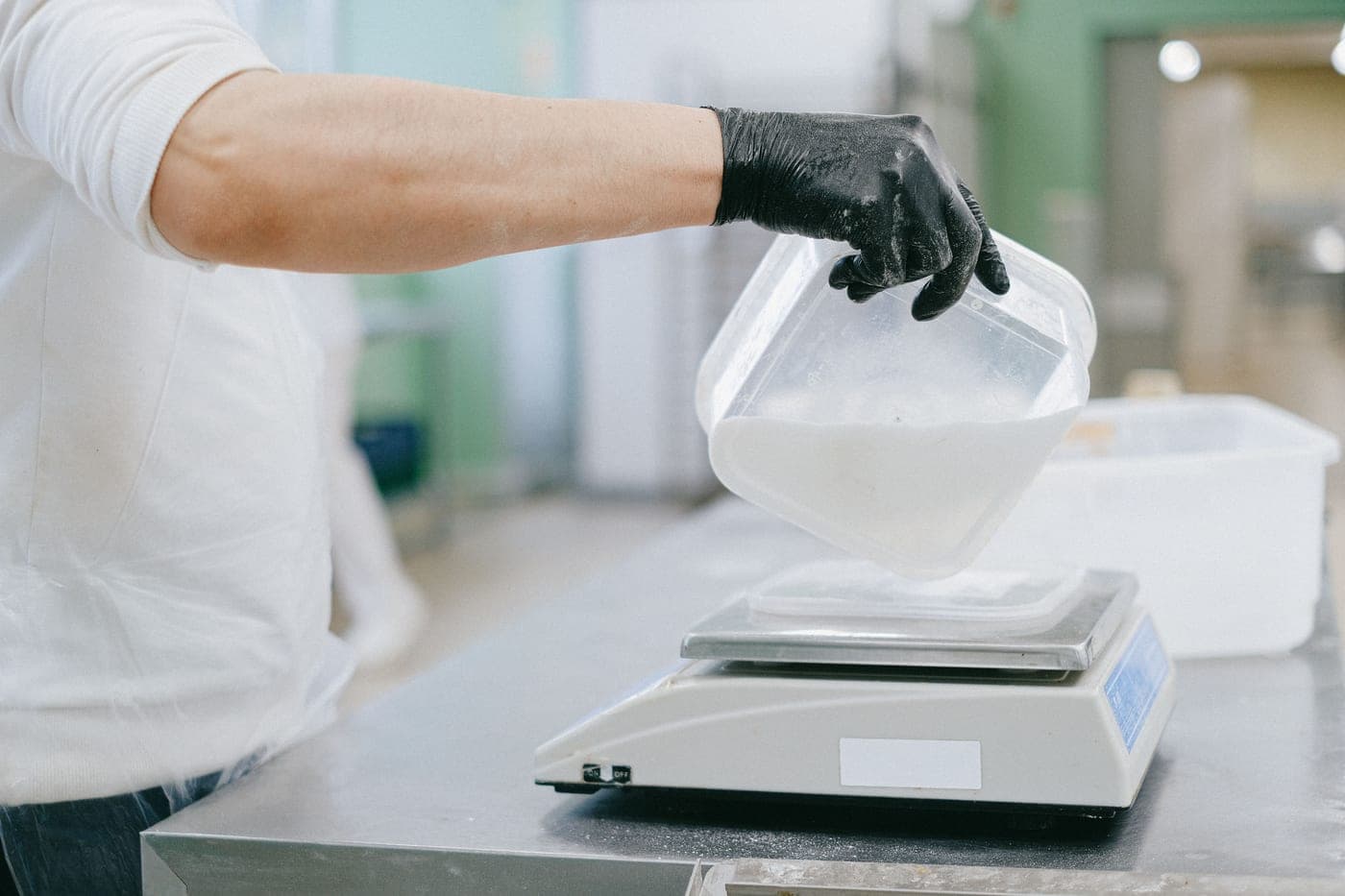
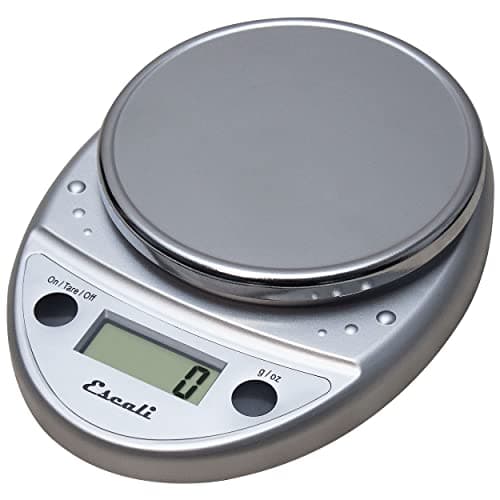
This is the thing kitchen-scale roundups never say. A typical 11 lb domestic scale reads in 1 gram steps. Against a 280 g dough ball that is 0.36 percent - far finer than you can portion by hand. Against 10 g of salt it is 10 percent. Against 2 g of instant yeast it is 50 percent, and no amount of care fixes that.
So either buy a second, small 0.1 g scale for the yeast and salt, or scale your recipe up until the small ingredients land above about 20 g. Both are legitimate. Pretending a 1 g scale weighs yeast accurately is not.
The dough ball weight question, answered with arithmetic
"How much dough for a 14-inch pizza" is one of the most-asked questions in home pizza and it is currently answered mostly by forum threads. It is pure geometry. Dough weight scales with the area of the finished pizza, so weight equals pi times the radius squared times a thickness factor that you choose according to the style you want. Pick your factor once, and every diameter follows from it.
A 12-inch pizza at a standard New York-ish factor comes out near 284 g; a 14-inch at the same factor near 386 g; a 16-inch near 504 g. Note that going from 12 to 16 inches is not a third more dough, it is 78 percent more - because area scales with the square of the diameter, and this is the single most common mistake in home dough scaling. The full table, the factors for thin through pan, and the working are on the dough ball weight chart.
What you genuinely do not need
A stand mixer, for pizza dough specifically - a 60 percent hydration dough at domestic batch size is comfortably hand-mixable, and a long rest does most of the work kneading would. A proofing drawer, unless your kitchen sits below about 65 F in winter. A dough docker, unless you make thin cracker-style bases. A marble slab. A pizza dough recipe app.