Skip to content
Peel & Flame
Roundup

The Best Pizza Steels, and What Thickness Actually Buys

A steel's advantage is real and it is not preheat speed. Here is the number that does the work, and what each extra eighth of an inch costs you.

By Scooter M./Published September 1, 2026

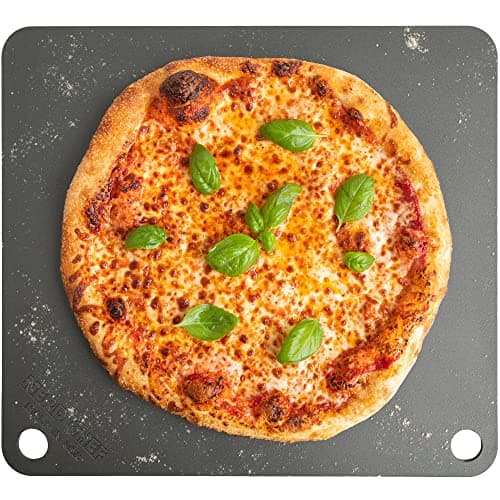
A flat sheet of steel plate photographed in bright daylight

Heads up: some links on this page are affiliate links. If you buy through one we may earn a commission at no extra cost to you. It never changes a ranking, and we accept no payment for placement. The full version.

The shortlist

Ranked, with the working

Ranked on published manufacturer specifications and, where the numbers exist, our own arithmetic on what each option does thermally. Tap any row for the full write-up, including who should skip it.

#ProductBest forScorePrice
01A flat steel baking plate - a stand-in for the Baking Steel Original, 16 x 14 x 1/4, not a photograph of this modelBaking Steel Original, 16 x 14 x 1/4The default steel for a domestic ovenBest overall9.2Check price on Amazon#ad affiliate link
02A flat steel baking plate - a stand-in for the NerdChef Steel Stone Standard, 16 x 14.25 x 1/4, not a photograph of this modelNerdChef Steel Stone Standard, 16 x 14.25 x 1/4Buyers who want the spec sheet to be honest before they buyMost honest spec sheet8.8Check price on Amazon#ad affiliate link
03A flat steel baking plate - a stand-in for the Baking Steel Pro, 16 x 16 x 3/8, not a photograph of this modelBaking Steel Pro, 16 x 16 x 3/8Back-to-back pizzas, where recovery between bakes is what limits youBest for back-to-back bakes8.5Check price on Amazon#ad affiliate link
04A cast iron cooking surface - a stand-in for the Lodge 15-Inch Cast Iron Pizza Pan, not a photograph of this modelLodge 15-Inch Cast Iron Pizza PanGetting most of the steel effect without the price or the liftCheapest way to the same physics8.3Check price on Amazon#ad affiliate link
05A flat steel baking plate - a stand-in for the NerdChef Steel Stone Ultimate, 16 x 14.25 x 1/2, not a photograph of this modelNerdChef Steel Stone Ultimate, 16 x 14.25 x 1/2A permanent bottom-rack installation you never moveHeaviest, and probably too heavy7.6Check price on Amazon#ad affiliate link

Scores are ours and editorial. They are never published as review or rating markup, because we have not baked on these products - here is how we pick.

The claim everybody repeats, and why it cannot be right

You will meet the number 18 constantly in this category. A steel conducts heat 18 times better than a stone. A steel stores 18 times more energy than a stone. Both sentences appear, sometimes on the same page. They cannot both be true, because conductivity and stored energy are different quantities with different ratios.

So we computed all three of the ratios that could plausibly be meant, from published material constants:

PropertyCarbon steelCordieriteRatio
Thermal conductivity, W/m.K501.3 to 1.729x to 38x
Volumetric heat capacity, MJ/m3.K3.711.732.1x
Thermal effusivity, W.s^0.5/m2.K13,6251,6128.5x
Thermal diffusivity, m2/s1.35e-58.7e-715.6x

Nothing lands on 18. The closest is diffusivity at 15.6, which is a property almost nobody quoting the figure could name. The stored-energy version of the claim is out by a factor of nine.

Credit where it is due: NerdChef states 20 times the conductivity and twice the heat capacity, as two separate figures. Their heat-capacity number matches our independently derived 2.1x almost exactly, which is why their spec sheet ranks second here on a criterion that has nothing to do with the plate itself.

The number that actually decides your crust

Effusivity. It is the square root of conductivity times volumetric heat capacity, and it governs the contact temperature when two bodies at different temperatures touch. That is precisely the physics of a 70 F wet base landing on a 500 F plate.

8.5x

Carbon steel's thermal effusivity against cordierite's

Not 18x, and not 2x. Effusivity is what sets how far the contact patch cools when the base lands, and it is the only one of the four ratios above that is about crust rather than about the plate.

High effusivity means the surface barely notices the dough arriving and keeps pushing heat into it. Low effusivity means the contact patch drops and takes time to recover, which is the mechanism behind a pale, slightly steamed base.

A steel is not faster to preheat. It is slower.

This is the most useful thing on this page and it is the opposite of the marketing. Internal conduction is not the bottleneck in a preheat - the Biot number for a quarter-inch steel is 0.001, which means heat crosses the surface roughly a thousand times more slowly than it travels through the plate. Mass is the bottleneck, and steel is dense.

SurfacePublished mass95% of oven temp99%Energy to 500 F
Old Stone 16" cordierite7.3 lb25 min38 min0.18 kWh
Lodge 15" cast iron pan9.9 lb23 min36 min0.15 kWh
Baking Steel Original, 1/4"15 lb27 min41 min0.21 kWh
Baking Steel Pro, 3/8"27 lb42 min64 min0.38 kWh
NerdChef Ultimate, 1/2"32 lb55 min85 min0.45 kWh

Two things fall out of that table. The quarter-inch steel takes two minutes longer than the stone, not less. And Baking Steel's own published guidance for the Original - 45 to 60 minutes at 500 to 550 F - brackets our computed 41-minute figure for 99 percent. Their number and our number were arrived at completely independently and they agree, which is the strongest validation available to a site that owns none of this equipment.

What we did not do

We have not baked on any of these. Every guide in this category says it tested a dozen stones; we would rather say plainly that we did not. What we did instead is on this page in full: published specs with their sources, thermal arithmetic from material constants with the working shown, and the makers' own manuals read rather than paraphrased.

What we would skip

Half-inch steel, for almost everybody. 32 pounds, 55 minutes to 95 percent of oven temperature, and no visible benefit on a single pizza over a quarter-inch. Buy it only if it is going onto a bottom rack permanently and you make four pizzas in a row.

Stainless steel plates sold as pizza steels. Austenitic stainless has roughly a third of carbon steel's thermal conductivity. It will not rust, and it will not perform like the plates on this page.

Any steel you cannot comfortably lift. The surface you actually use beats the surface that wins on paper, every time.

In full

Every pick, with the specs and the sources

01 / Best overallA flat steel baking plate - a stand-in for the Baking Steel Original, 16 x 14 x 1/4, not a photograph of this model

Stock photo of the product type, not this model. We publish no product photography we cannot source.

Baking Steel

9.2/10

Baking Steel Original, 16 x 14 x 1/4

A quarter inch is the thickness where a steel stops being a novelty and stays a thing you can still lift. Its advantage over a stone is not preheat speed - it is what happens one second after the base lands.

What it does well

  • Thermal effusivity about 8.5 times a cordierite stone's, which is the number that decides bottom crust
  • Cannot crack, cannot be thermally shocked, will outlive the oven
  • Published weight, thickness and preheat guidance, all from the maker
  • Doubles as a griddle and a searing surface

What it does not

  • Fifteen pounds at arm's length into a 500 F oven is a real consideration
  • Needs seasoning maintained or it rusts
  • It will not preheat faster than a stone - it is heavier, so if anything it takes slightly longer

Skip it if

You cannot comfortably lift 15 pounds into a hot oven at chest height, or you bake more bread than pizza and want the forgiveness of a stone.

Published specifications

Dimensions16" x 14"Source: Baking Steel product page
Thickness1/4" (6.35 mm)Source: Baking Steel product page
Weight15 lbSource: Baking Steel product page
MaterialSolid carbon steel, seasoned by hand with flax oilSource: Baking Steel product page
Maker's preheat guidance45-60 minutes at 500-550 FSource: Baking Steel product page

Our arithmetic

Mass used
15.0 lb (published)
Energy stored, 68 F to 500 F
0.21 kWh
Time constant
8.9 min
95% of oven temperature
27 min
99% of oven temperature
41 min
Thermal effusivity
13,625 W.s^0.5/m2.K
Biot number
0.001

Show the working

The maker's published preheat guidance and our model agree.

Lumped-capacitance model, h = 20 W/m2.K: tau = 8.9 minutes, so 95 percent of the way to oven temperature at 27 minutes and 99 percent at 41 minutes. Baking Steel publishes 45-60 minutes at 500-550 F. Two independent routes to the same answer is the closest thing to validation we can offer without owning one.

How it scores

Crust transfer9.6
Preheat burden7.4
Durability10.0
Published spec quality9.4
Check price on Amazon

#ad We hold no verified live price for this product, so we show none. How this site is funded.

02 / Most honest spec sheetA flat steel baking plate - a stand-in for the NerdChef Steel Stone Standard, 16 x 14.25 x 1/4, not a photograph of this model

Stock photo of the product type, not this model. We publish no product photography we cannot source.

NerdChef

8.8/10

NerdChef Steel Stone Standard, 16 x 14.25 x 1/4

The same quarter-inch plate, from the one maker in this category that states conductivity and heat capacity as two separate numbers instead of mashing them into one slogan.

What it does well

  • Publishes conductivity and heat capacity separately, which is the physically correct way to state them
  • Their 'twice the heat capacity' claim matches our independently derived 2.1x almost exactly
  • Published weight lands within 2 percent of the mass its own dimensions imply

What it does not

  • Rectangular rather than square
  • No published preheat guidance, unlike Baking Steel
  • Seasoning is on you

Skip it if

You want a square surface. At 14.25 inches deep this is a rectangle, so a 14-inch pizza has almost no margin front to back.

Published specifications

Dimensions16" x 14.25" x 0.25"Source: Amazon product listing
Weight16 lbSource: Amazon product listing
Maximum temperature1000 FSource: Amazon product listing
Maker's own claim20x the conductivity of a ceramic stone and twice the heat capacity - stated as two separate figuresSource: Amazon product listing

Our arithmetic

Mass used
16.0 lb (published)
Energy stored, 68 F to 500 F
0.23 kWh
Time constant
9.4 min
95% of oven temperature
28 min
99% of oven temperature
43 min
Thermal effusivity
13,625 W.s^0.5/m2.K
Biot number
0.001

How it scores

Crust transfer9.6
Preheat burden7.2
Durability10.0
Published spec quality9.0
Check price on Amazon

#ad We hold no verified live price for this product, so we show none. How this site is funded.

03 / Best for back-to-back bakesA flat steel baking plate - a stand-in for the Baking Steel Pro, 16 x 16 x 3/8, not a photograph of this model

Stock photo of the product type, not this model. We publish no product photography we cannot source.

Baking Steel

8.5/10

Baking Steel Pro, 16 x 16 x 3/8

Half again the mass of the quarter-inch, for a bottom crust that barely notices the dough landing - and a preheat that takes half again as long and 27 pounds you have to lift.

What it does well

  • Square, so a 14-inch pizza has clearance on every side
  • Recovers between bakes faster than anything else here
  • Published weight matches our geometric derivation to within 2 percent, which says the published figure is real

What it does not

  • 27 pounds
  • 42 minutes to 95 percent of oven temperature, against 27 for the quarter-inch
  • Costs more and delivers a benefit most households will only see on pizza night three or four

Skip it if

You bake one pizza at a time. The quarter-inch already saturates the crust's ability to absorb heat; the extra mass only pays back when pizza two goes in five minutes after pizza one.

Published specifications

Dimensions16" x 16"Source: Baking Steel product page
Thickness3/8" (9.5 mm)Source: Baking Steel product page
Weight27 lbSource: Baking Steel product page
MaterialSolid carbon steel, pre-seasonedSource: Baking Steel product page

Our arithmetic

Mass used
27.0 lb (published)
Energy stored, 68 F to 500 F
0.38 kWh
Time constant
13.9 min
95% of oven temperature
42 min
99% of oven temperature
64 min
Thermal effusivity
13,625 W.s^0.5/m2.K
Biot number
0.002

How it scores

Crust transfer9.8
Preheat burden4.8
Durability10.0
Published spec quality9.2
Check price on Amazon

#ad We hold no verified live price for this product, so we show none. How this site is funded.

04 / Cheapest way to the same physicsA cast iron cooking surface - a stand-in for the Lodge 15-Inch Cast Iron Pizza Pan, not a photograph of this model

Stock photo of the product type, not this model. We publish no product photography we cannot source.

Lodge

8.3/10

Lodge 15-Inch Cast Iron Pizza Pan

Cast iron sits within about 5 percent of carbon steel on every thermal number that matters, costs a fraction of a steel, and has handles. The catch is that this is a pan with a rim, not a flat plate you can slide a pizza onto.

What it does well

  • Effusivity within about 5 percent of carbon steel, so the crust barely knows the difference
  • Handles, which no steel or stone has
  • Under 10 pounds
  • Published weight and dimensions from the maker

What it does not

  • A rim, so peel launching is awkward at best
  • Seasoning to maintain
  • Cast iron is brittle - drop it on a tile floor and it is done

Skip it if

You want to launch off a peel. The raised rim means you build the pizza on the pan or transfer it awkwardly - which changes how you make pizza, not just what you make it on.

Published specifications

Diameter15" (19.25" across the handles)Source: Lodge product page
Weight9.91 lbSource: Lodge product page
MaterialCast iron, seasoned with vegetable oil, made in the USASource: Lodge product page
UseOven safe; not recommended for stovetop useSource: Lodge product page

Our arithmetic

Mass used
9.9 lb (published)
Energy stored, 68 F to 500 F
0.15 kWh
Time constant
7.8 min
95% of oven temperature
23 min
99% of oven temperature
36 min
Thermal effusivity
13,002 W.s^0.5/m2.K
Biot number
0.001

How it scores

Crust transfer9.2
Preheat burden8.8
Handling8.6
Peel friendliness3.5
Check price on Amazon

#ad We hold no verified live price for this product, so we show none. How this site is funded.

05 / Heaviest, and probably too heavyA flat steel baking plate - a stand-in for the NerdChef Steel Stone Ultimate, 16 x 14.25 x 1/2, not a photograph of this model

Stock photo of the product type, not this model. We publish no product photography we cannot source.

NerdChef

7.6/10

NerdChef Steel Stone Ultimate, 16 x 14.25 x 1/2

Thirty-two pounds of carbon steel. Genuinely the most thermally capable surface here, and genuinely the one most likely to sit in a cupboard because you cannot face lifting it.

What it does well

  • Nothing recovers faster between bakes
  • Effectively indestructible
  • Published weight matches the derived mass to within 2 percent

What it does not

  • 32 lb is a two-hand, both-feet-planted lift
  • 55 minutes to 95 percent of oven temperature, and about 0.45 kWh just to heat the plate
  • The thermal gain over a quarter-inch is invisible on a single pizza

Skip it if

You will ever need to take it out. Half an inch takes 55 minutes to reach 95 percent of oven temperature, and no domestic bake needs the extra mass over a quarter-inch.

Published specifications

Dimensions16" x 14.25" x 0.5"Source: Amazon product listing
Weight32 lbSource: Amazon product listing
Maximum temperature1000 FSource: Amazon product listing

Our arithmetic

Mass used
32.0 lb (published)
Energy stored, 68 F to 500 F
0.45 kWh
Time constant
18.1 min
95% of oven temperature
54 min
99% of oven temperature
83 min
Thermal effusivity
13,625 W.s^0.5/m2.K
Biot number
0.002

How it scores

Crust transfer10.0
Preheat burden3.0
Durability10.0
Published spec quality8.6
Check price on Amazon

#ad We hold no verified live price for this product, so we show none. How this site is funded.

Questions

Frequently asked

Is a baking steel worth the money?
If pale bottom crust is your complaint, yes - the effusivity gap is 8.5 times and it is visible in the first bake. If your complaint is anything else, no: a steel will not fix wet toppings, a cold oven or a dough problem.
How thick should a pizza steel be?
A quarter inch, for almost everyone. It is where a steel stops being a novelty and stays liftable, and doubling the thickness roughly doubles the preheat while adding nothing you can see on a single pizza. The full thickness-by-thickness working is in the thickness guide.
Does a pizza steel need seasoning?
Yes. Bare carbon steel rusts. Most makers ship theirs pre-seasoned; you maintain it the way you would a cast iron pan - dry it thoroughly, wipe on a very thin film of oil, and never leave it wet.
Can I use a steel for bread?
You can, and the high effusivity gives excellent oven spring. The caution is that the same aggression that crisps a pizza base in six minutes will scorch the bottom of a 50-minute loaf. Lower the temperature or move the loaf up after the first 15 minutes.
Why does the maker say 45 to 60 minutes when your table says 27?
Because they are answering different questions. Our 27 minutes is 95 percent of the way to oven temperature; 41 minutes is 99 percent. A maker sensibly quotes the conservative end, and 45 to 60 minutes brackets our 99 percent figure. Both are right.

Sources

Every number on this page came from one of these, or from arithmetic on one of these that we showed in full.