Heads up: some links on this page are affiliate links. If you buy through one we may earn a commission at no extra cost to you. It never changes a ranking, and we accept no payment for placement. The full version.
What crisp actually is
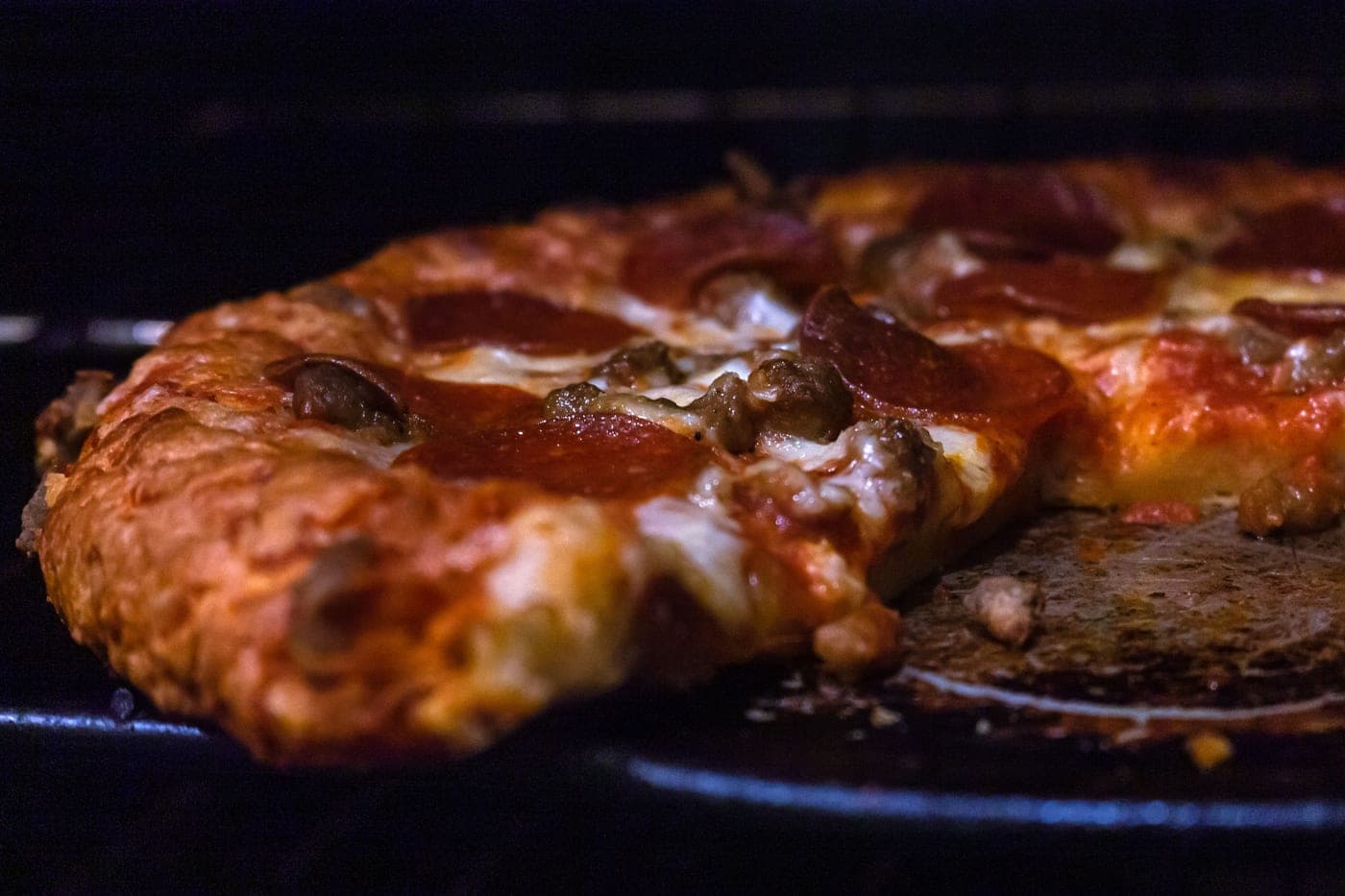
A crisp base is a base whose bottom few millimeters have dried out and set into a rigid structure before the moisture above them could soften it back down. It is a race between drying and re-wetting, and every lever below shifts that race.
Which is why heat is only half the story. A very hot surface dries the base fast; a very wet topping load re-wets it just as fast.
The six levers, in order of effect
1. Surface temperature. The largest single factor, and the cheapest to fix because the fix is usually just waiting longer. A stone that has had 25 minutes past the beep behaves completely differently from one that has had five. Nothing else on this list matters if the surface is at 380 F.
2. Surface effusivity. How hard the surface resists being cooled by the base landing on it. Carbon steel is 8.5 times cordierite here, cast iron 8.1 times. This is the physical reason a steel produces a crisper base than a stone at the same temperature - the full derivation is in stone versus steel.
3. Moisture load on top. Free to fix, and often bigger than people expect. Sauce, fresh mozzarella and vegetables all release water downward. Use less sauce than feels right, drain the mozzarella, and pre-cook mushrooms and peppers.
4. Bake time. Counter-intuitive: longer is not crisper past a point. Once the base has set, additional time dries it into something hard and dull rather than crisp and shattering. Hotter and shorter beats cooler and longer, every time.
5. Dough hydration and thickness. A wetter dough gives a more open, blistered result and takes longer to dry; a thinner base dries faster than a thick one. Neither is better - they are different pizzas - but if crisp is the priority, do not go thick and wet at once.
6. What happens after it comes out. Free, immediate, and the one most people have never considered. See below.
A wire rack
The free fix nobody mentions
A pizza set on a board or a plate traps its own steam underneath and goes floppy within two minutes. On a wire rack the steam escapes and it stays crisp.
The two-minute problem
A pizza that comes out crisp and is soft by the time you eat it did not fail in the oven. It failed on the board.
A hot base sitting on a solid surface releases steam that has nowhere to go, condenses under the base, and softens it. Set it on a wire rack instead and the steam leaves. Cut on the rack if you can, or transfer to a board only for the seconds it takes to slice.
The same mechanism runs in reverse the next day, which is why a cold slice needs hot dry contact heat rather than hot air to come back: the best way to reheat pizza goes through the two methods the hardware makers publish themselves.
Getting crisp without a stone or a steel
Preheat an upturned heavy baking sheet. Not the same as a proper surface, and it is a real improvement over baking on a cold sheet - you get contact with something hot instead of something cold.
Bake on the lowest rack, closest to the bottom element. Use the thinnest base you can handle. Be even meaner with the sauce. And if you own a large cast iron pan, preheat that - it is within 5 percent of a baking steel on every thermal number that matters.
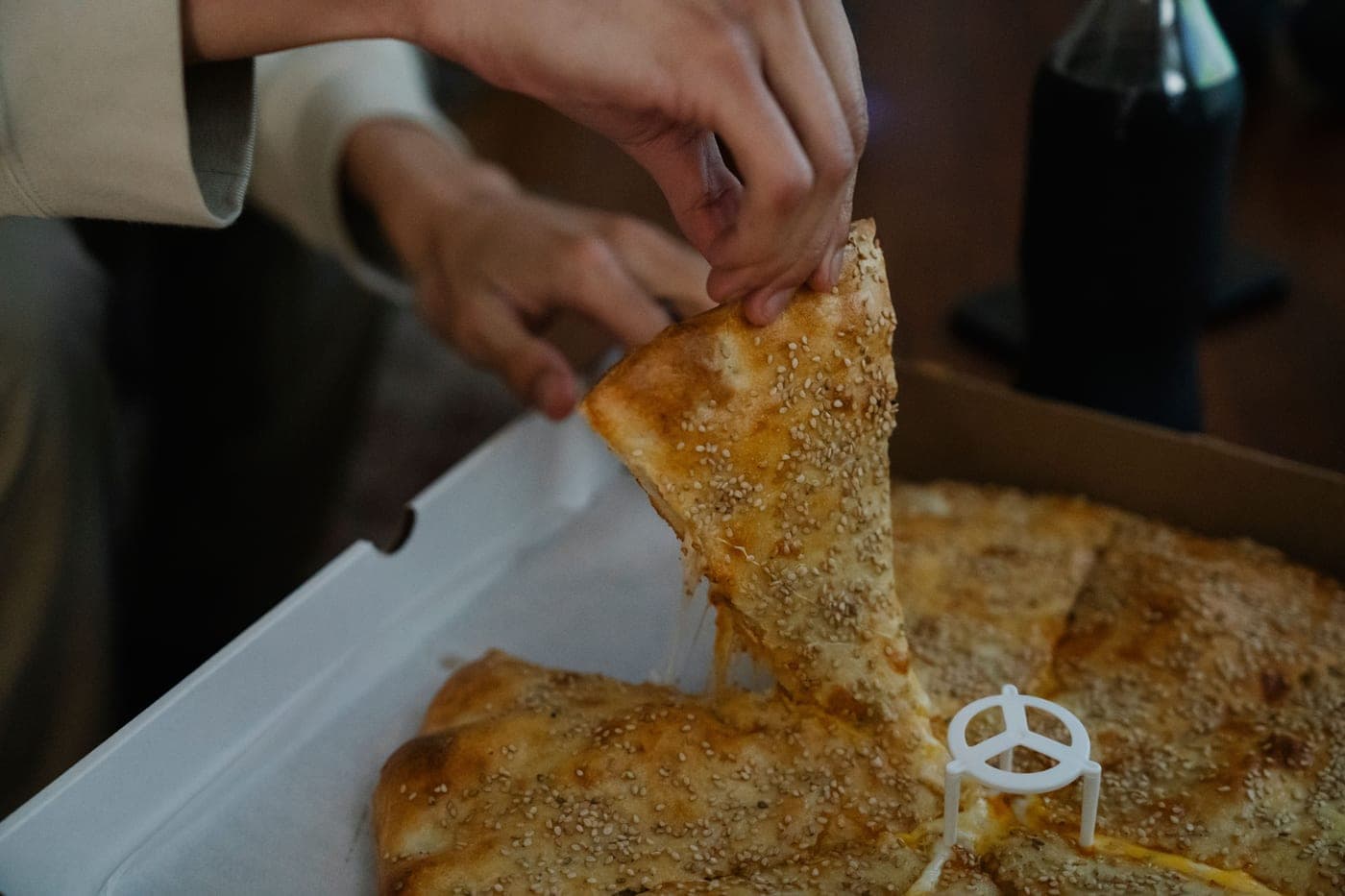
The slice test: a properly set base holds its own tip out horizontally for a second. If it folds immediately, the base never dried.
The blistering question
Those dark spots on a good cornicione are not the same thing as crispness. They come from large gas bubbles in a well-fermented dough charring at very high heat - typically above about 700 F, which is above what a domestic oven does.
You can approximate them by finishing under the broiler for the last 60 to 90 seconds. What you cannot do is get true Neapolitan leoparding out of a 550 F oven, and any guide claiming otherwise is selling something.
What we did not do
We have not baked on any of these. Every guide in this category says it tested a dozen stones; we would rather say plainly that we did not. What we did instead is on this page in full: published specs with their sources, thermal arithmetic from material constants with the working shown, and the makers' own manuals read rather than paraphrased.
What does not work
Oiling the base. Fries the bottom rather than drying it - a different texture, and a greasy one.
Par-baking, for a thin pizza. It works for thick pan styles. On a thin base it sets the dough, then the topping re-wets it during the second bake, and you have gone round in a circle.
Cornmeal in the dough. It changes the flavor and does very little to the texture. Cornmeal is useful under the pizza, not in it.
The picks
What we would buy
Baking Steel
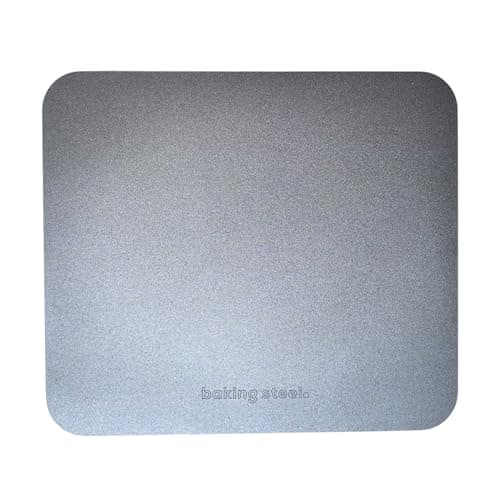
Baking Steel Original, 16 x 14 x 1/4
A quarter inch is the thickness where a steel stops being a novelty and stays a thing you can still lift. Its advantage over a stone is not preheat speed - it is what happens one second after the base lands.
The adjustable emissivity is the reason to buy this rather than a cheap gun. Fixed-emissivity instruments read a seasoned steel 40 to 80 F low, and that is the difference between a good bake and a pale one.
#ad We hold no verified live price for this product, so we show none. How this site is funded.
Old Stone
Old Stone 16-Inch Round Cordierite Pizza Stone
The most useful stone shape for a home oven, at a weight one hand can manage, and one of the very few whose retailer publishes both a thickness and a weight.
Get the surface genuinely hot - 500 F plus, measured, not assumed - use less sauce than feels right, bake hot and short rather than cool and long, and rest the finished pizza on a wire rack rather than a board.
How do you get a crispy crust without a pizza stone?+
Preheat an upturned heavy baking sheet or a large cast iron pan on the lowest rack. Cast iron in particular is within about 5 percent of a baking steel on every thermal number that matters.
Why does my pizza go soft after it comes out of the oven?+
Steam condensing underneath. A hot base on a solid board traps its own moisture. Move it to a wire rack and it stays crisp.
Does a longer bake make a crispier crust?+
Only up to a point. Once the base has set, more time dries it into something hard rather than crisp. Hotter and shorter is the route to crisp.
Does high hydration dough make a crispier crust?+
Not by itself - a wetter dough has more water to drive off, so it takes longer to dry. What it does give is a more open, blistered structure, which is a different quality people often conflate with crispness.
Sources
Every number on this page came from one of these, or from arithmetic on one of these that we showed in full.