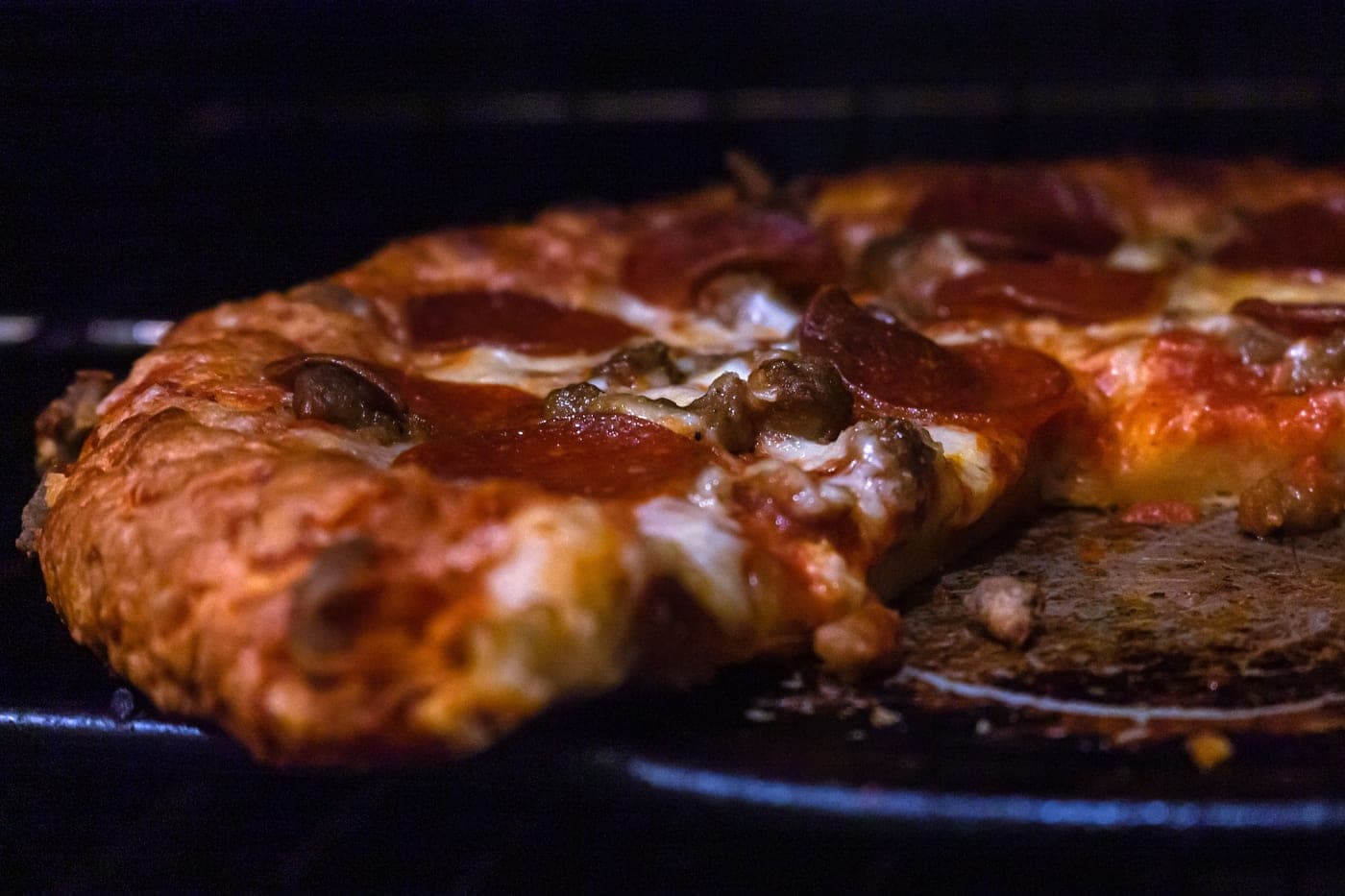
Put the slice on a hot, dry metal or ceramic surface, base down. Oven at 450 F on a preheated steel or stone for 4 to 6 minutes; stovetop in a covered cast iron skillet over medium for about 5. Everything else is a compromise.
Heads up: some links on this page are affiliate links. If you buy through one we may earn a commission at no extra cost to you. It never changes a ranking, and we accept no payment for placement. The full version.
The answer, before the reasoning
A cold slice has two problems and they pull in opposite directions. The cheese and toppings need gentle heat to come back to temperature. The base needs fierce, dry, direct contact heat to drive out the moisture it absorbed overnight in the fridge. Any method that solves one and ignores the other gives you the result you already know: molten cheese on a limp base, or a crisp base with cold cheese in the middle.
Every method that works puts the base in direct contact with something hot, dry and heavy, and gives the top a few minutes of trapped heat. That is the whole principle. There are exactly two good executions of it, and both are published by the people who make the hardware.
Method 1: the oven, on a preheated surface
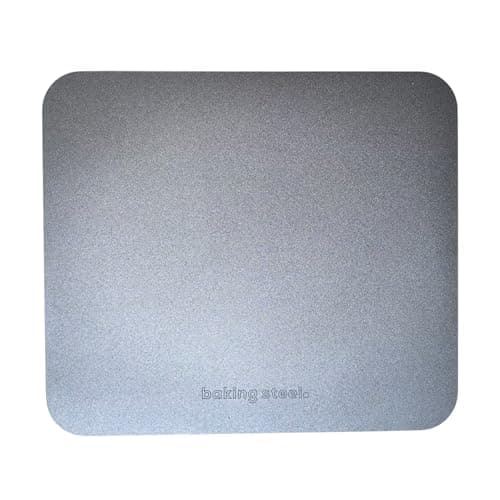
This is Baking Steel's own published procedure, and it is the one we would use. Preheat the oven to 450 F with the steel or stone on the middle rack for at least 30 minutes - their wording is that the steel "needs the full time to charge, even after the oven says it is ready". Put the slice directly on the surface, base down, no tray and no foil. Heat for 4 to 6 minutes, nearer four for one slice and nearer six for several, until the cheese bubbles and the bottom crisps. Thirty seconds under the broiler at the end if you want it blistered, watched the whole time.
The 30-minute figure is not marketing. A quarter-inch steel of the published 15 lb needs about 27 minutes to close 95 percent of the gap to oven temperature on this site's own preheat model - so the maker's instruction and our arithmetic agree to within a few minutes, which is rarer than it should be. The full working is in steel vs stone preheat times.
What we did not do
We have not baked on any of these. Every guide in this category says it tested a dozen stones; we would rather say plainly that we did not. What we did instead is on this page in full: published specs with their sources, thermal arithmetic from material constants with the working shown, and the makers' own manuals read rather than paraphrased.
0.19 kWh
Energy held by a 15 lb quarter-inch steel at 450 F, above a 68 F kitchen
Derived from the published 15 lb weight and the specific heat of A36 carbon steel. A slice takes a tiny fraction of that, which is why the surface barely drops in temperature and why the base crisps instead of steaming.
Method 2: the stovetop, in a covered skillet
Lodge publishes this one, and Baking Steel - who sell a competing product - call a cast iron skillet "the best one if you do not own a steel". When a manufacturer points you at somebody else's pan, the method is worth taking seriously.
Lodge's published sequence: heat the dry skillet over medium for about five minutes, add the slice, then add half a teaspoon of water beside the slice rather than on it and cover the pan briefly. The water flashes to steam, the trapped steam melts the cheese from above, and the dry iron keeps working on the base underneath. Take the lid off and finish uncovered until the base is crisp.
That half-teaspoon is the clever part, and it is the only place in any reheating method where water belongs. It solves the cold-cheese half of the problem without ever touching the base.
A lid, five minutes and half a teaspoon of water. The cheapest correct answer to this question is a pan most kitchens already own.
What the two methods have in common, and why the others fail
Method
What the base gets
Result
Preheated steel or stone, 450 F
Direct contact with a charged, dry, heavy surface
Base re-crisps; this is the best of them
Dry cast iron skillet, covered
Direct contact with hot dry iron, steam only above
Very close to the above, on a burner
Slice on a baking sheet in the oven
A thin pan that holds almost no heat
Dries out before it crisps - the pan has nothing to give
Air fryer
Fast hot air, no contact heat worth the name
Edges crisp, base stays soft, toppings dry
Microwave
Energy into the water inside the base
Steams the crust - Baking Steel's published reason not to
The pattern is the second column, not the first. A half sheet pan holds roughly an eighth of the heat a stone does per square inch - the table is in are pizza stones worth it - so a slice put on a hot sheet pan pulls the pan down to its own temperature almost immediately and then just sits in dry air losing moisture. That is the mechanism behind every disappointing oven reheat.
Three rules that matter more than the method
Take it out of the fridge first. Fifteen minutes on the counter takes the chill off the cheese so the top is not still cold when the base is done. This is the same reasoning as the thermal-shock rule for stones in why pizza stones crack - a cold mass on a hot surface is hard on both of them.
Never put a hot slice back in foil. Foil traps steam under the base, which is the one thing you are trying to remove. The same logic sinks the cover-it-in-the-oven approach.
Keep the surface dry. No oil in the skillet. Oil fries the base rather than crisping it, and on a seasoned surface it is also how you end up with a sticky finish - see seasoning and rust on a pizza steel.
Which surface to own, if reheating is the thing you do most
Be honest about the frequency. If you reheat pizza twice a week and make it from scratch twice a year, the ranking below is not the same as the ranking on the steel roundup, because the thing you are buying for is a four-minute bake at 450 F rather than a six-minute bake at 550.
Best for reheating specifically: the Baking Steel Original. Carbon steel moves heat into the base faster than ceramic does at the same temperature, which is exactly what a limp base needs, and it is the surface the published method was written for. It also solves the everyday problem of wanting the pizza hardware to already be in the oven: the maker says many bakers leave it in permanently, and that keeping it in there protects it from rust.
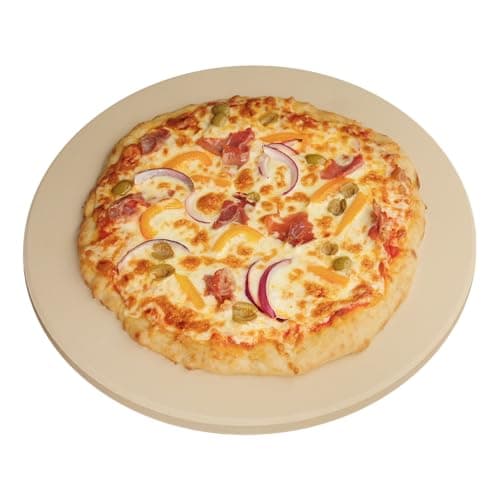
Best for a household that bakes as well as reheats: the Old Stone 16-inch round. A published 10 lb of cordierite holds 0.25 kWh at 500 F, it wicks moisture out of a raw base in a way steel cannot, and it costs a fraction of a plate. Slower to charge - about 34 minutes to 95 percent against the steel's 27 - but if it lives on the rack, the only cost is remembering to turn the oven on early.
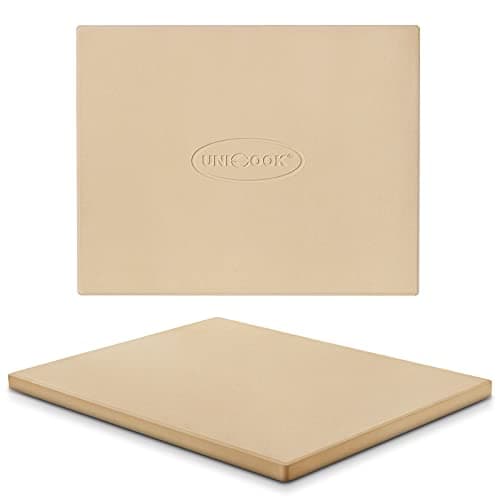
Best cheap option: the Unicook 15 x 12. The lightest of the three at a published 6.6 lb and the quickest to charge, about 24 minutes. It holds the least energy of the three, which matters for a Neapolitan bake and barely registers for a slice.
And the honest fourth answer: if you own a cast iron skillet and a lid, you do not need to buy anything at all. Lodge's method is free, and we are not going to pretend otherwise to sell you a plate.
The picks
What we would buy
Baking Steel
Baking Steel Original, 16 x 14 x 1/4
A quarter inch is the thickness where a steel stops being a novelty and stays a thing you can still lift. Its advantage over a stone is not preheat speed - it is what happens one second after the base lands.
The most useful stone shape for a home oven, at a weight one hand can manage, and one of the very few whose retailer publishes both a thickness and a weight.
Unicook Heavy Duty Cordierite Pizza Stone, 15 x 12
A rectangle uses an oven rack better than a circle does, and at 6.6 published pounds this is the lightest surface here that still holds a useful amount of heat.
450 F on a preheated steel or stone, which is Baking Steel's published figure, for 4 to 6 minutes. On the stovetop there is no dial setting to quote: Lodge's published method is a dry skillet over medium heat for about five minutes before the slice goes in.
Can you reheat pizza on a pizza stone?+
Yes, and it is the second-best method here. Preheat the stone with the oven for at least 30 minutes - longer than a steel needs, because a 16-inch round takes about 34 minutes to reach 95 percent of oven temperature on our model - then put the slice straight onto the stone, base down. Expect a slightly slower crisp than a steel gives and a slightly drier base, because a porous body wicks moisture as well as heating it.
Why does microwaved pizza go soggy?+
A microwave puts energy into the water already inside the base, so the base steams from the inside out. Baking Steel put it plainly on their own reheating page: microwaves "heat the water in the food, which steams the crust rather than crisping it". Nothing about the method can be adjusted to fix that.
Is an air fryer good for reheating pizza?+
It is better than a microwave and worse than either method here. An air fryer moves hot air fast, which crisps the exposed edge, but the base is sitting on a thin perforated basket that holds almost no heat - so the one surface that needs contact heat does not get any. If the air fryer has a flat tray, a small stone in it gets you most of the way back; the sizing for that is in stones for toaster and countertop ovens.
Should I cover the pizza while it reheats?+
Only on the stovetop, only briefly, and only with half a teaspoon of water beside the slice rather than on it - that is Lodge's published sequence, and the lid comes off to finish. In the oven, never: a cover traps the steam coming out of the base, which is the exact thing the hot surface underneath is working to remove.
Do I need to oil the pan?+
No. A dry surface crisps the base; an oiled one fries it, and leaves you with a greasy finish to clean off a seasoned surface afterwards. Neither published method uses oil.
Sources
Every number on this page came from one of these, or from arithmetic on one of these that we showed in full.