The short answer
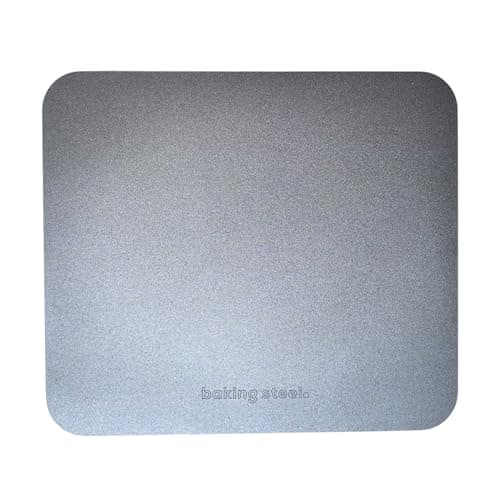
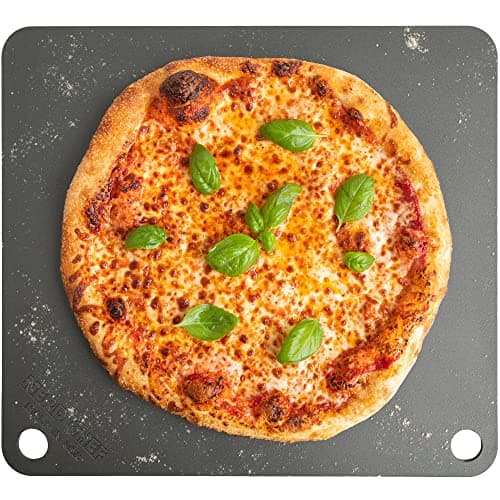
A quarter inch. It stores enough energy that a single 14-inch pizza does not meaningfully cool it, it reaches 95 percent of oven temperature in about 27 minutes, and at 15 to 16 published pounds it is still something one person can lift into a hot oven without planning the movement first.
What each thickness actually is, in numbers
All figures below are for a plate roughly 16 by 14 inches, using published weights where the maker gives one and our own geometry where they do not. The preheat times are ours, from the lumped-capacitance model described on the methodology page.
| Thickness | Published mass | Time constant | 95% of oven temp | 99% | Energy to 500 F |
|---|
| 1/4 in (6.35 mm) | 15-16 lb | 8.9 min | 27 min | 41 min | 0.21 kWh |
| 3/8 in (9.5 mm) | 23-27 lb | 13.9 min | 42 min | 64 min | 0.38 kWh |
| 1/2 in (12.7 mm) | 32 lb | 18.4 min | 55 min | 85 min | 0.45 kWh |
+15 min per 1/8 in
Roughly what each extra eighth of an inch adds to the preheat
And 8 to 12 pounds. The thermal benefit over a quarter inch is invisible on a single pizza, because the first pizza was never able to cool a quarter-inch plate enough to matter.
Why more thickness stops helping
A 14-inch pizza base has a limited ability to absorb heat in the first two minutes - it is a thin, mostly-water layer with a fixed contact area. Once the plate underneath holds more energy than the base can take in that window, extra mass is not doing anything for that pizza. A quarter-inch steel is already comfortably past that point.
What extra mass buys is recovery. Pizza number two, going in five minutes after pizza number one, lands on a plate that has been cooled by pizza number one and then given only five minutes to recover. A heavier plate sags less and comes back faster. That is the entire case for three eighths, and it is a good case if you actually bake in sequence.
Diminishing returns, quantified
Going from a quarter inch to three eighths is a 50 percent increase in thickness, an 80 percent increase in stored energy, a 56 percent longer preheat, and roughly 10 more pounds to lift. Going from three eighths to a half is a further 33 percent thickness, 18 percent more energy, 31 percent longer preheat and another 5 to 9 pounds.
The half-inch step is the worst deal in the category: nearly a third more preheat for less than a fifth more stored energy, on a plate most people cannot handle safely when hot.
What thickness cannot fix
Anything upstream of the surface. If your oven runs 60 F cold, if you preheat for 15 minutes, or if your base is soaked through with sauce before it goes in, no amount of steel helps. Rule those out first - the checks are in what to upgrade next - because they are free and thickness is not.
What to buy, by situation
One pizza a week, domestic oven, normal human arms: quarter inch.
Three or four pizzas back to back on pizza night: three eighths, and accept the 42-minute preheat.
The steel lives on the bottom rack permanently and never moves: three eighths or a half. Since you are never lifting it, the only cost is preheat time and the energy to get there - about 21 cents an hour on an electric oven, worked out in what preheating costs.
You are not sure a steel is the answer at all: preheat the cast iron pan you already own and bake on that first. Full reasoning in stone versus cast iron.