Heads up: some links on this page are affiliate links. If you buy through one we may earn a commission at no extra cost to you. It never changes a ranking, and we accept no payment for placement. The full version.
What a banneton is actually doing
A banneton - a proofing basket, usually cane or wood pulp - supports a shaped loaf during its final rise. A slack, well-fermented bread dough left on a flat surface spreads sideways under its own weight; the basket holds it upright so it goes into the oven tall and the oven spring goes up rather than out.
The ridges are secondary: they make the flour pattern people recognize, and they give the surface a little grip.
Why pizza dough wants the opposite
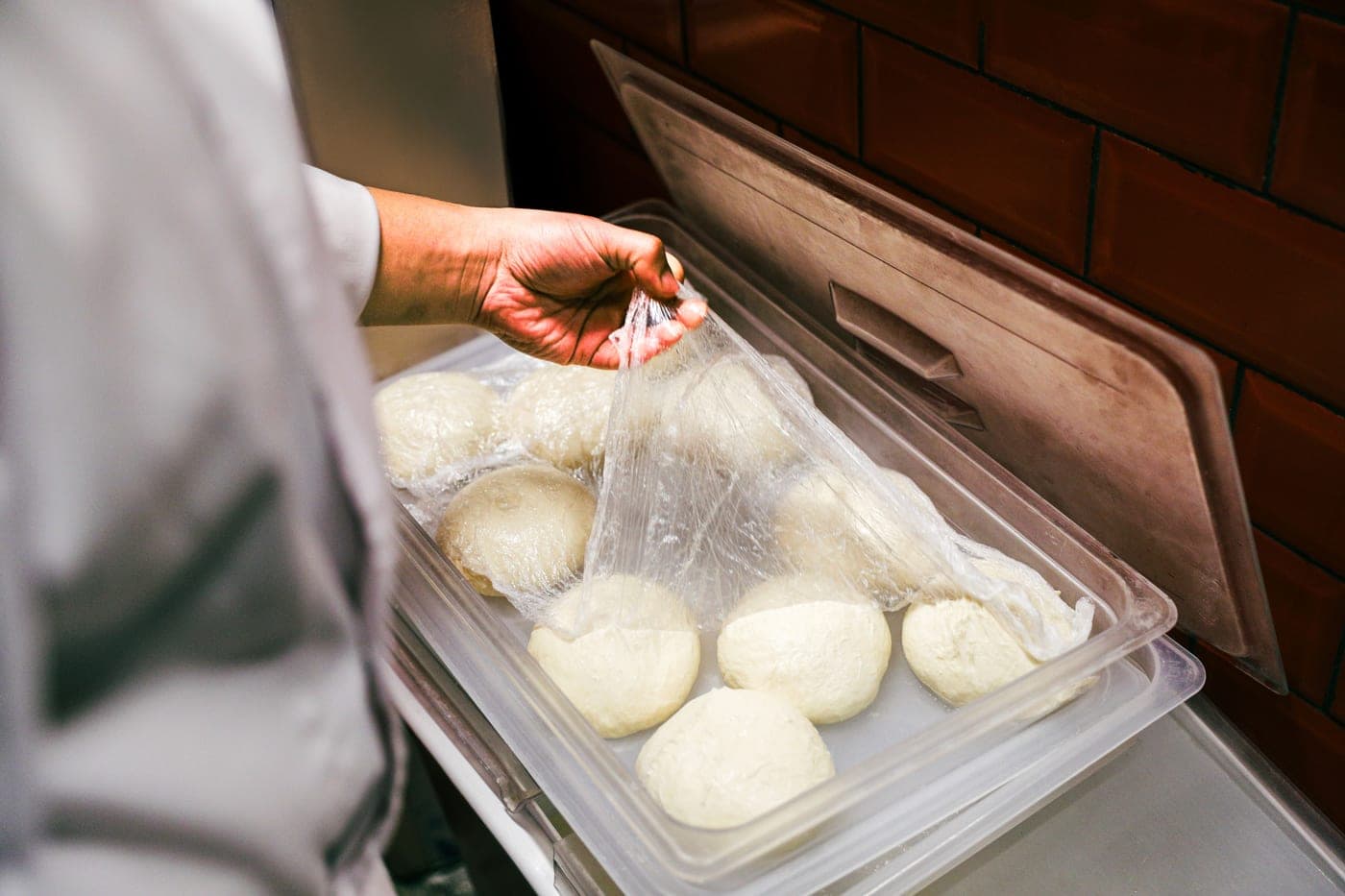
You are going to stretch this ball flat. Everything you want from the proof is in service of that: an even, relaxed, extensible disc that opens without fighting you and without tearing in the middle.
A ball held upright in a basket does the reverse. It keeps its dome, the gluten stays under tension, and when you press it out it springs back. That is exactly the property that makes a good loaf and exactly the property that makes stretching a pizza harder than it needs to be.
Hold vs relax
The whole difference in two words
A banneton holds shape against gravity so a loaf rises upward. A pizza tray lets a ball relax outward so it opens easily. Same category of object, opposite jobs.
The comparison
Banneton
Dough tray or tub
Shapes the dough
Yes, upward
Yes, outward into a disc
Sealed against drying
No - needs a cover or a bag
Yes, with a lid
Stacks in a fridge
No
Yes
Cleaning
Brush only, never wash
Dishwasher or sink
Cold retard for 48-72 h
Awkward - the surface dries
What it is designed for
Right for pizza
No
Yes
When a banneton does make sense
If you also bake bread. Then buy one, and buy it for the loaf.
Pan pizza with a very slack dough. A high-hydration Detroit or Sicilian dough proofs in the pan it bakes in, which is a tray, not a basket.
Sourdough pizza at high hydration, as an intermediate bulk vessel - but a lidded tub does the same job while also stopping the surface skinning, and the surface skinning is the specific failure mode of an uncovered basket in a fridge.
For pizza, a lid matters more than a shape. Seventy-two hours in a fridge will skin any uncovered surface.
What to buy instead
A lidded container roughly twice the height of a seated ball and about 1.5 times its diameter across, and a bench scraper to divide and lift with. That is the whole kit, and it costs less than one basket. The container roundup has the sizing.
The picks
What we would buy
Ooni
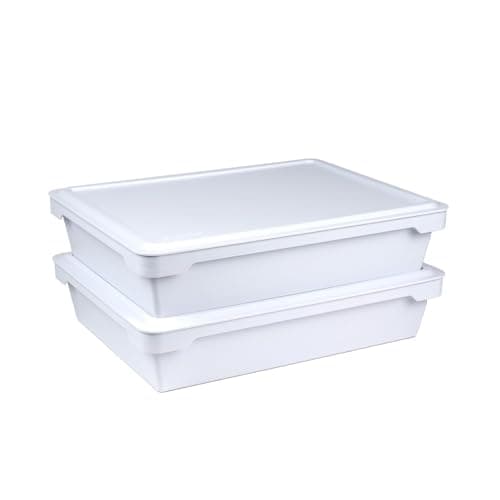
Ooni Pizza Dough Proofing Boxes, Set of 2
Shallow, stackable and 3.7 inches tall, which makes this the only dough box here that clears a domestic fridge shelf. The maker publishes both the dimensions and the dough-ball count, which is more than the restaurant-supply options manage.
#ad We hold no verified live price for this product, so we show none. How this site is funded.
OXO
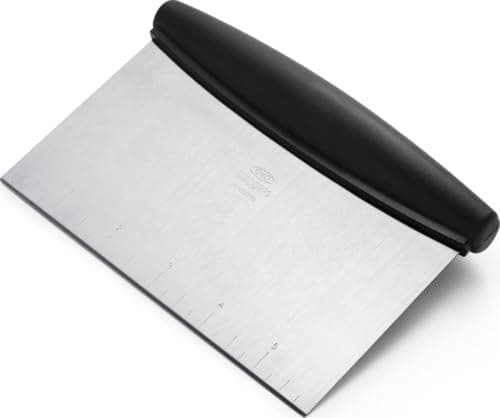
OXO Good Grips Bench Scraper and Chopper
Six inches of stainless with inch markings etched into it. It divides dough, it lifts dough, and it measures the divisions - which is more than most single-purpose dough tools manage.
You can, and it works against you. A banneton holds a ball's shape upright, which keeps the gluten under tension - the opposite of the relaxed, extensible disc that stretches easily.
What is a banneton alternative?+
For bread, a bowl lined with a floured tea towel does nearly the same job. For pizza you do not want the effect at all, so a lidded shallow container is the answer.
Do you flour a banneton?+
Yes, generously, and rice flour is better than wheat because it does not absorb moisture and glue the loaf in. And never wash a cane basket - brush it out and let it dry.
Can I proof pizza dough in a bowl?+
Yes. A bowl with a lid or a plate over it is fine, and it is what most people start with. The reason to move to a shallow lidded container is stacking and the shape the ball ends up in, not the ferment itself.
Sources
Every number on this page came from one of these, or from arithmetic on one of these that we showed in full.