Skip to content
Peel & Flame
Roundup

The Best Kitchen Scales for Pizza Dough

A 1 gram scale weighs a dough ball to 0.36 percent and your yeast to 50 percent. Both of those are true at once, and only one of them is fine.

By Scooter M./Published September 1, 2026

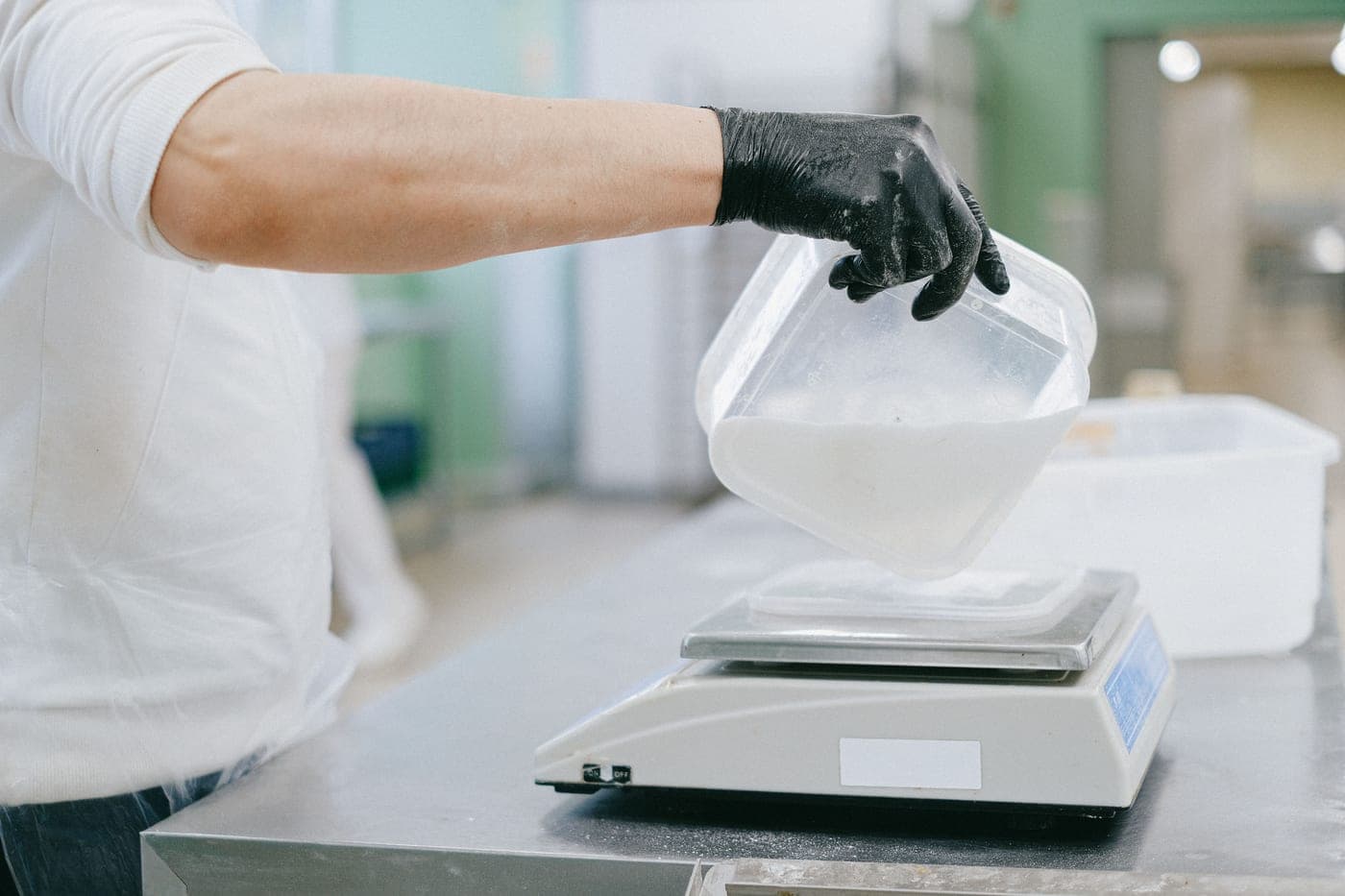
A digital kitchen scale weighing flour

Heads up: some links on this page are affiliate links. If you buy through one we may earn a commission at no extra cost to you. It never changes a ranking, and we accept no payment for placement. The full version.

The shortlist

Ranked, with the working

Ranked on published manufacturer specifications and, where the numbers exist, our own arithmetic on what each option does thermally. Tap any row for the full write-up, including who should skip it.

#ProductBest forScorePrice
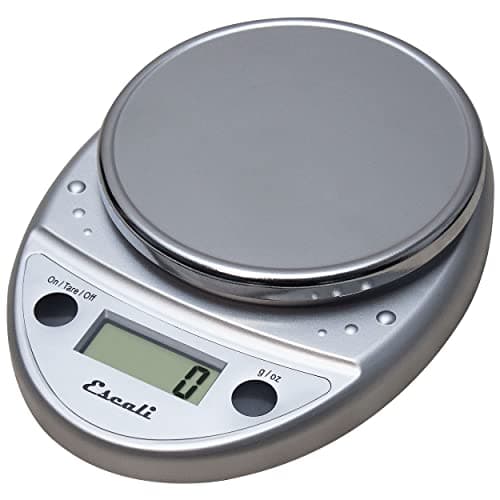
01A digital kitchen scale - a stand-in for the Escali Primo P115 Digital Kitchen Scale, not a photograph of this modelEscali Primo P115 Digital Kitchen ScaleWeighing flour, water and finished dough ballsBest main scale8.6Check price on Amazon#ad affiliate link
02A digital kitchen scale - a stand-in for the American Weigh AWS-100 Pocket Scale, 100 g x 0.01 g, not a photograph of this modelAmerican Weigh AWS-100 Pocket Scale, 100 g x 0.01 gYeast, salt and anything else under about 20 gramsThe second scale you need8.9Check price on Amazon#ad affiliate link
03A digital kitchen scale - a stand-in for the OXO Good Grips 11 lb Stainless Steel Food Scale, not a photograph of this modelOXO Good Grips 11 lb Stainless Steel Food ScaleWeighing straight into a bowl bigger than the scaleBest if you weigh into big bowls8.4Check price on Amazon#ad affiliate link

Scores are ours and editorial. They are never published as review or rating markup, because we have not baked on these products - here is how we pick.

The arithmetic nobody runs

Every domestic kitchen scale reads in 1 gram steps. That number means completely different things depending on what is on the platform.

What you are weighingTypical amount1 g as a share of itGood enough?
Flour500 g0.2%Easily
Water320 g0.3%Easily
A dough ball280 g0.36%Finer than you can portion by hand
Salt10 g10%Marginal
Instant yeast2 g50%No

20 g

The amount below which a 1 gram kitchen scale stops being a measurement

Above it, a normal scale is fine and a fancier one buys you nothing. Below it, you need a 0.01 g pocket scale or a bigger batch. There is no third option.

Two legitimate fixes. Buy a 0.01 g pocket scale - the cheapest genuine upgrade in this whole category - or scale your recipe up until the small ingredients land above 20 g, which for most pizza doughs means a batch of five or six balls.

What actually matters in a main scale

Capacity of at least 5 kg. You want to put an empty mixing bowl on the platform, tare it, and weigh into it. A 2 kg scale runs out with the bowl on.

A visible display when a bowl is on it. The single most annoying failure of a cheap scale. Either the display sits clear of the platform or it pulls out.

Auto-off you can live with. Four minutes is fine. Sixty seconds means the scale dies while you fetch the flour and you lose the tare.

A flat platform with nothing to trap flour. Raised bezels and rubber feet on the weighing surface collect dough.

What does not matter: reading in ounces as well as grams (weigh in grams and stop thinking about it), bluetooth, or a built-in timer.

What we did not do

We have not baked on any of these. Every guide in this category says it tested a dozen stones; we would rather say plainly that we did not. What we did instead is on this page in full: published specs with their sources, thermal arithmetic from material constants with the working shown, and the makers' own manuals read rather than paraphrased.

How to use it, in the order that avoids mistakes

Bowl on, tare, flour in, tare, water in, tare, salt in, tare, yeast in. Weighing everything cumulatively into one bowl with a tare between each means one dish and no chance of transposing two numbers.

Weigh the finished dough before you divide it and divide by the number of balls you want - that is your target per ball, and it will not be exactly your recipe's figure because some dough always stays on the bowl. The scale is more honest than the recipe.

And weigh in baker's percentages: flour is 100 percent, everything else is a percentage of the flour weight. A 65 percent hydration dough with 2 percent salt is a recipe that scales to any batch size, and it is why a scale is what makes a repeatable dough possible at all.

What we would skip

Scales under 5 kg capacity. The bowl eats the range.

Scales with the display on the platform. Any bowl wider than the scale hides it.

Smart scales with an app. A scale that needs a phone to be a scale is a scale with a battery problem waiting to happen.

Spring scales. Not accurate enough, and they drift with age in a way you cannot detect.

In full

Every pick, with the specs and the sources

01 / Best main scaleA digital kitchen scale - a stand-in for the Escali Primo P115 Digital Kitchen Scale, not a photograph of this model

Stock photo of the product type, not this model. We publish no product photography we cannot source.

Escali

8.6/10

Escali Primo P115 Digital Kitchen Scale

Eleven pounds of capacity at one-gram resolution, which is exactly right for flour and dough balls and exactly wrong for yeast. Know which half of your recipe it is for.

What it does well

  • Five kilos of capacity means you can weigh flour straight into a mixing bowl and tare
  • One-gram steps are 0.36 percent of a 280 g dough ball - far finer than you can portion by hand
  • Four-minute auto shut-off is long enough not to die mid-recipe
  • Flat platform with nothing to trap flour

What it does not

  • 1 g resolution is useless for yeast and marginal for salt
  • AA batteries rather than USB
  • The 8 by 6 inch footprint takes real counter space

Skip it if

You are scaling 2 grams of instant yeast. At 1 g resolution that is a 50 percent uncertainty, and no amount of care fixes it - you need a 0.1 g scale or a bigger batch.

Published specifications

Capacity5000 g / 11 lb / 175 ozSource: Escali Primo P115 user manual
Resolution1 g or 0.1 ozSource: Escali Primo P115 user manual
Dimensions8" x 6" x 1.25"Source: Escali Primo P115 user manual
Auto shut-off4 minutes of non-useSource: Escali Primo P115 user manual

Show the working

One gram is precise for dough and useless for yeast. Here is where the line falls.

Resolution as a percentage of what you are weighing: a 280 g dough ball, 1 g = 0.36 percent. 500 g of flour, 1 g = 0.2 percent. 10 g of salt, 1 g = 10 percent. 2 g of instant yeast, 1 g = 50 percent. Anything under about 20 g is out of this scale's useful range, which is why a 1 kg by 0.1 g pocket scale is the cheapest genuine upgrade in the whole dough-tools category.

How it scores

Capacity9.4
Resolution for dough9.0
Resolution for yeast2.5
Usability8.8
Check price on Amazon

#ad We hold no verified live price for this product, so we show none. How this site is funded.

02 / The second scale you needA digital kitchen scale - a stand-in for the American Weigh AWS-100 Pocket Scale, 100 g x 0.01 g, not a photograph of this model

Stock photo of the product type, not this model. We publish no product photography we cannot source.

American Weigh Scales

8.9/10

American Weigh AWS-100 Pocket Scale, 100 g x 0.01 g

The cheapest genuine upgrade in the whole dough-tools category. A 1 g kitchen scale cannot weigh 2 g of yeast to better than 50 percent; this resolves it to half a percent.

What it does well

  • 0.01 g resolution turns yeast from a guess into a measurement
  • Flip lid protects the platform in a drawer
  • One-touch calibration, which matters on a scale this fine
  • Costs less than most single ingredients you will weigh on it

What it does not

  • 100 g capacity - it is a second scale, never the only one
  • A 2.5 by 3 inch platform will not take a bowl
  • Fine scales drift; calibrate it occasionally or the resolution is theater

Skip it if

You expect it to replace your kitchen scale. It tops out at 100 g, which is about a third of one dough ball.

Published specifications

Capacity and resolution100 g x 0.01 gSource: Amazon product listing
Dimensions3.0" x 5.0" x 0.8", platform 2.5" x 3.0"Source: Amazon product listing
Unitsg, oz, ct, gnSource: Amazon product listing
CalibrationOne-touch calibration; some variants ship with a calibration weightSource: Amazon product listing

Show the working

Why a 1 g scale cannot weigh yeast, in one line of arithmetic.

Resolution as a share of the thing being weighed. At 1 g steps: a 280 g dough ball is 0.36 percent, 500 g of flour is 0.2 percent, 10 g of salt is 10 percent, 2 g of instant yeast is 50 percent. At 0.01 g steps that same 2 g of yeast is 0.5 percent. The crossover sits around 20 g - above it a kitchen scale is fine, below it you need this or a bigger batch.

How it scores

Resolution for yeast9.8
Capacity2.0
Repeatability8.4
Value9.6
Check price on Amazon

#ad We hold no verified live price for this product, so we show none. How this site is funded.

03 / Best if you weigh into big bowlsA digital kitchen scale - a stand-in for the OXO Good Grips 11 lb Stainless Steel Food Scale, not a photograph of this model

Stock photo of the product type, not this model. We publish no product photography we cannot source.

OXO

8.4/10

OXO Good Grips 11 lb Stainless Steel Food Scale

The same 11 lb capacity and 1 g resolution as any other domestic scale, with one design decision that matters: the display pulls out, so a wide mixing bowl does not hide it.

What it does well

  • The pull-out display solves the one genuine annoyance of weighing into a big bowl
  • Stainless platform wipes clean and does not stain
  • Same 5 kg capacity as any full-size domestic scale

What it does not

  • 1 g resolution, so still useless for yeast
  • Large footprint
  • Costs more than a plain platform scale that weighs identically

Skip it if

Counter space is tight. At roughly 9 by 12 inches this is one of the larger domestic scales, and the pull-out tray adds to that.

Published specifications

Capacity11 lb / 5 kgSource: OXO product page
Resolution1 g / 1/8 ozSource: OXO product page
DimensionsApproximately 1.9" x 9.05" x 12.4"Source: OXO product page
DisplayPulls out from under the platform so a large bowl does not shadow itSource: OXO product page

How it scores

Capacity9.4
Resolution for dough9.0
Resolution for yeast2.5
Usability9.4
Check price on Amazon

#ad We hold no verified live price for this product, so we show none. How this site is funded.

Questions

Frequently asked

What is the best kitchen scale for pizza dough?
Any scale with 5 kg capacity, 1 g resolution and a display you can read with a bowl on it. The more useful question is the second scale: a 0.01 g pocket scale for yeast, which a 1 g scale cannot weigh meaningfully.
Do I need a 0.1 g scale for pizza dough?
For the yeast, yes, or you need a bigger batch. At 2 g of instant yeast a 1 g scale has a 50 percent uncertainty. Scale up to a five or six ball batch and the yeast lands above 10 g, where a normal scale copes.
Can I make pizza dough with cups instead?
You can make pizza. You cannot make the same pizza twice, because a cup of flour varies by 20 percent or more depending on how it was scooped - which is a bigger error than anything else in the recipe.
How accurate does the water need to be?
More accurate than most people think, because hydration is the variable you are actually adjusting. On a 500 g flour base, 10 g of water is 2 percentage points of hydration, and 2 points is visible in how the dough handles.

Sources

Every number on this page came from one of these, or from arithmetic on one of these that we showed in full.