Skip to content
Peel & Flame
Roundup

The Best Infrared Thermometers for Pizza

Adjustable emissivity is the spec that separates these, and no competing guide we found mentions it at all. Here is the arithmetic on what it costs you.

By Scooter M./Published September 1, 2026

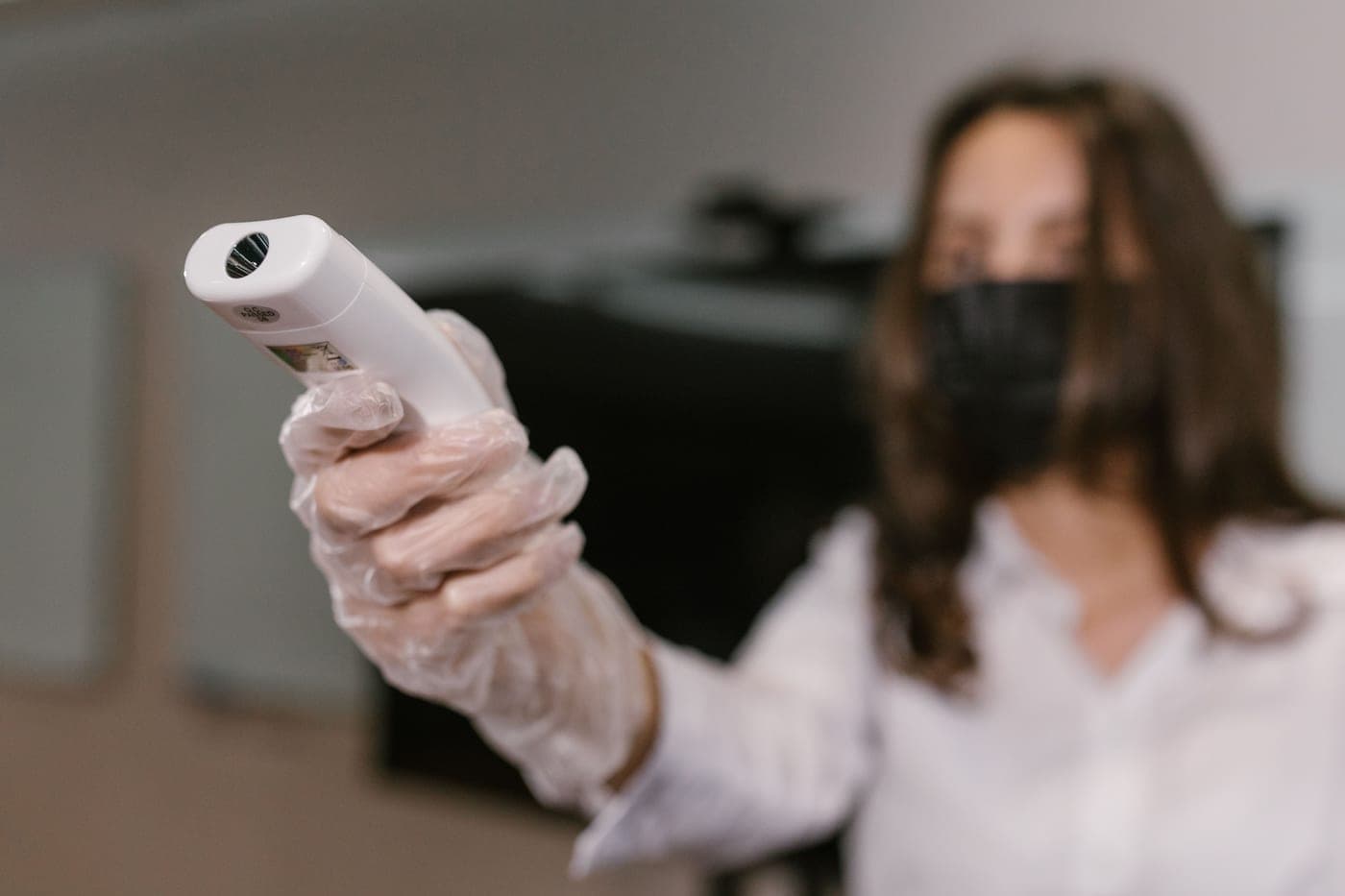
An infrared thermometer being used to read a surface temperature

Heads up: some links on this page are affiliate links. If you buy through one we may earn a commission at no extra cost to you. It never changes a ranking, and we accept no payment for placement. The full version.

The shortlist

Ranked, with the working

Ranked on published manufacturer specifications and, where the numbers exist, our own arithmetic on what each option does thermally. Tap any row for the full write-up, including who should skip it.

#ProductBest forScorePrice
01An infrared thermometer gun - a stand-in for the ThermoWorks Industrial IR Gun (IR-GUN-S), not a photograph of this modelThermoWorks Industrial IR Gun (IR-GUN-S)Anyone who wants the surface temperature to actually be the surface temperatureBest overall9.3Check price on Amazon#ad affiliate link
02An infrared thermometer gun - a stand-in for the ThermoPro TP30 Infrared Thermometer, not a photograph of this modelThermoPro TP30 Infrared ThermometerAnyone baking on steel who does not want to spend three times as muchBest value with emissivity8.6Check price on Amazon#ad affiliate link
03An infrared thermometer gun - a stand-in for the ThermoWorks Hi-Temp Industrial IR with Circle Laser (IR-IND), not a photograph of this modelThermoWorks Hi-Temp Industrial IR with Circle Laser (IR-IND)Portable and wood-fired ovens, where the floor runs past 900 FBest for outdoor ovens8.8Check price on Amazon#ad affiliate link
04An infrared thermometer gun - a stand-in for the Etekcity Lasergrip 1080 Infrared Thermometer, not a photograph of this modelEtekcity Lasergrip 1080 Infrared ThermometerA first infrared thermometer, used on ceramicCheapest, if you bake on stone8.0Check price on Amazon#ad affiliate link

Scores are ours and editorial. They are never published as review or rating markup, because we have not baked on these products - here is how we pick.

An infrared thermometer does not measure temperature

It measures radiance and infers a temperature, and to do that it has to assume a value for the surface's emissivity - how efficiently that surface radiates compared with a perfect emitter. Cheap instruments fix that assumption at 0.95, which is about right for painted surfaces, ceramics and most food.

It is not right for metal. Published emissivity for oxidized or rolled steel is 0.66 to 0.80. Polished steel is 0.07 to 0.17. When the real emissivity is below the assumed one, the surface is radiating less than the instrument expects, and the reading comes out low.

How low, exactly

The error goes as the fourth root of the ratio of real to assumed emissivity, in kelvin. So for a surface truly at 500 F - 533 K - read by an instrument fixed at 0.95:

SurfacePublished emissivityInstrument readsError
Fired ceramic body (brick reference)0.90 to 0.95487 to 500 F0 to 13 F low
Seasoned or oxidized steel, upper end0.80460 F40 F low
Seasoned or oxidized steel, lower end0.66417 F83 F low
Bright, unseasoned steel0.17Around 290 FOver 200 F low

40 to 83 F

How far a fixed-0.95 infrared gun reads low on a seasoned steel

Which is the difference between deciding your steel is ready and deciding it needs another twenty minutes. On a stone the same instrument is out by about 13 F, which mostly does not change what you do.

Two conclusions. On cordierite, a fixed-emissivity gun is fine. On steel or cast iron, either buy an instrument with adjustable emissivity, or know that yours reads cold and by roughly how much - and either is better than not knowing.

What we did not do

We have not baked on any of these. Every guide in this category says it tested a dozen stones; we would rather say plainly that we did not. What we did instead is on this page in full: published specs with their sources, thermal arithmetic from material constants with the working shown, and the makers' own manuals read rather than paraphrased.

The other two specs worth comparing

Distance-to-spot ratio. 12:1 means a 1-inch spot at 12 inches. Point it from three feet away and you are averaging a 3-inch circle, which on a partly shaded surface averages away exactly the variation you were trying to see. A 30:1 optic reads the same 1-inch spot from two and a half feet, which is how you measure the back of a hot oven without leaning in.

Range ceiling. 1022 F covers anything a domestic oven can do with a comfortable margin. A wood-fired or gas portable oven floor runs past that, so those need the 1400 F instrument.

What matters less than the listings suggest: response time (anything under a second is fine on a surface that changes over minutes), backlights, and color-changing displays.

How to actually use one on a baking surface

  1. Set the emissivity if you can. Around 0.90 to 0.95 for cordierite, 0.70 to 0.80 for a seasoned steel or cast iron. If you cannot, note that steel readings run low.
  2. Open the oven and read immediately. A surface starts losing heat the moment the door opens, and the first two seconds are the honest ones.
  3. Read the center and one edge. They will differ, often by 30 to 50 F, and the difference tells you where to put the pizza.
  4. Get close enough that the spot is smaller than the area you care about. With 12:1 optics that means roughly a foot away.
  5. Do not point it at the oven walls and expect a cabinet temperature. It reads whatever surface it can see, and that is not the same thing as air.
An open oven radiating heat
The one number worth measuring is the surface the pizza touches. Every other temperature in the process is a proxy for it.

What we would skip

Any instrument that does not publish its emissivity setting. If a listing does not say, assume fixed at 0.95.

Instruments with a ceiling under about 750 F. You will hit it on a grill.

Phone-attachment thermal cameras, for this job. They are excellent at showing you where the hot spots are and poor at telling you a number you can trust.

In full

Every pick, with the specs and the sources

01 / Best overallAn infrared thermometer gun - a stand-in for the ThermoWorks Industrial IR Gun (IR-GUN-S), not a photograph of this model

Stock photo of the product type, not this model. We publish no product photography we cannot source.

ThermoWorks

9.3/10

ThermoWorks Industrial IR Gun (IR-GUN-S)

The adjustable emissivity is the reason to buy this rather than a cheap gun. Fixed-emissivity instruments read a seasoned steel 40 to 80 F low, and that is the difference between a good bake and a pale one.

What it does well

  • Adjustable emissivity, which is the single spec that decides whether the reading means anything on metal
  • Published +/- 2.7 F accuracy, roughly ten times tighter than a dial oven thermometer
  • 12:1 optics let you read a small area from outside the oven mouth
  • Max/min tracking while you sweep across the surface

What it does not

  • Costs several times what a fixed-emissivity gun costs
  • It reads surfaces, not air, so it will not tell you the oven's cabinet temperature
  • 1022 F ceiling is below what a wood-fired oven floor can reach

Skip it if

You only ever bake on cordierite. A fired ceramic sits close enough to the 0.95 a cheap gun assumes that the error is around 13 F, which mostly does not change what you do.

Published specifications

Range-76 F to 1022 F (-60 C to 550 C)Source: ThermoWorks product page
Accuracy+/- 2.7 FSource: ThermoWorks product page
Distance to spot12:1 - a 1" spot at 12"Source: ThermoWorks product page
EmissivityAdjustable, 0.1 to 1.0Source: ThermoWorks product page

Show the working

What a fixed 0.95 emissivity setting costs you on a seasoned steel.

An infrared thermometer infers temperature from radiance, assuming an emissivity. Where the real emissivity is lower than the assumed one, the reading comes out low by a factor of (real/assumed) to the power 1/4, in kelvin. Oxidized or rolled steel is published at 0.66 to 0.80. At a true 500 F (533 K) with the instrument fixed at 0.95: at emissivity 0.80 the gun reads 460 F, at 0.66 it reads 417 F. On a ceramic body, closer to the 0.90 to 0.95 published for common brick, the same gun reads about 487 F. That is the whole argument for adjustable emissivity, and no competitor guide we found mentions it.

How it scores

Accuracy on stone9.4
Accuracy on steel9.6
Optics8.8
Value6.5
Check price on Amazon

#ad We hold no verified live price for this product, so we show none. How this site is funded.

02 / Best value with emissivityAn infrared thermometer gun - a stand-in for the ThermoPro TP30 Infrared Thermometer, not a photograph of this model

Stock photo of the product type, not this model. We publish no product photography we cannot source.

ThermoPro

8.6/10

ThermoPro TP30 Infrared Thermometer

Adjustable emissivity at a budget-gun price, which is the combination that matters. Accuracy is looser than the ThermoWorks, but a correctable reading beats a precise wrong one.

What it does well

  • Adjustable emissivity, which is the one spec that decides whether a reading on steel means anything
  • Same 12:1 optics and 1022 F ceiling as instruments costing far more
  • Manual published openly, which is more than most budget instruments manage

What it does not

  • 1.5 percent at 500 F is about 7 F of uncertainty
  • Reads surfaces only, so it tells you nothing about cabinet air
  • No max/min tracking while you sweep

Skip it if

You need tight absolute accuracy. Plus or minus 1.5 percent at 500 F is around 7 F, against 2.7 F for the ThermoWorks.

Published specifications

Range-58 F to 1022 F (-50 C to 550 C)Source: ThermoPro TP-30 instruction manual
Accuracy+/- 1.5 percentSource: ThermoPro TP-30 instruction manual
Distance to spot12:1Source: ThermoPro TP-30 instruction manual
EmissivityAdjustable 0.1 to 1.0, default 0.95Source: ThermoPro TP-30 instruction manual

How it scores

Accuracy on stone8.6
Accuracy on steel9.0
Optics8.8
Value9.2
Check price on Amazon

#ad We hold no verified live price for this product, so we show none. How this site is funded.

03 / Best for outdoor ovensAn infrared thermometer gun - a stand-in for the ThermoWorks Hi-Temp Industrial IR with Circle Laser (IR-IND), not a photograph of this model

Stock photo of the product type, not this model. We publish no product photography we cannot source.

ThermoWorks

8.8/10

ThermoWorks Hi-Temp Industrial IR with Circle Laser (IR-IND)

A 30:1 optic and a 1400 F ceiling, which is the only instrument here that can read a wood-fired oven floor from outside the mouth. Overkill for a domestic oven and exactly right for an outdoor one.

What it does well

  • 30:1 optics read a 1-inch spot from two and a half feet, so you never lean into the oven mouth
  • 1400 F ceiling covers a wood-fired floor, which a 1022 F instrument does not
  • Emissivity adjustable in 0.01 steps rather than coarse presets

What it does not

  • Plus or minus 2 percent of reading at high temperature is looser than the IR-GUN-S at domestic temperatures
  • The most expensive instrument here by some way
  • Every capability past 1022 F is wasted on a domestic oven

Skip it if

You only bake in a domestic oven. A 1022 F ceiling covers everything a household oven can do, and costs less.

Published specifications

Range-76 F to 1400 F (-60 C to 760 C)Source: ThermoWorks IR-IND product page
Accuracy+/- 4 F or 2 percent of reading from 32 F to 1400 FSource: ThermoWorks IR-IND operating instructions
Distance to spot30:1 - a 1" spot at 30"Source: ThermoWorks IR-IND product page
EmissivityAdjustable 0.1 to 1.0 in 0.01 steps, default 0.95Source: ThermoWorks IR-IND operating instructions

How it scores

Accuracy on stone8.4
Accuracy on steel9.6
Optics9.8
Value5.5
Check price on Amazon

#ad We hold no verified live price for this product, so we show none. How this site is funded.

04 / Cheapest, if you bake on stoneAn infrared thermometer gun - a stand-in for the Etekcity Lasergrip 1080 Infrared Thermometer, not a photograph of this model

Stock photo of the product type, not this model. We publish no product photography we cannot source.

Etekcity

8.0/10

Etekcity Lasergrip 1080 Infrared Thermometer

Right range, right optics, fixed emissivity. On a stone that is fine. On a seasoned steel it reads low, predictably - and predictable error is something you can correct for once you know the number.

What it does well

  • Same 12:1 optics and same 1022 F ceiling as instruments costing far more
  • 0.95 fixed is close to right for cordierite and fired ceramic
  • Half-second response, so you can sweep the surface and watch the number move

What it does not

  • Fixed emissivity, so metal surfaces read low
  • Plus or minus 2 percent at 500 F is about 10 F, against 2.7 F for the ThermoWorks
  • Listings disagree on the ceiling - some say 1022 F, some say 1130 F

Skip it if

You bake on steel and want a number you can trust without doing arithmetic on it every time.

Published specifications

Range-58 F to 1022 F (-50 C to 550 C)Source: Etekcity product page
Accuracy+/- 2 percentSource: Etekcity product page
Distance to spot12:1Source: Etekcity product page
Emissivity0.95, fixedSource: Etekcity product page
Response time500 msSource: Etekcity product page

How it scores

Accuracy on stone8.4
Accuracy on steel3.5
Optics8.8
Value9.6
Check price on Amazon

#ad We hold no verified live price for this product, so we show none. How this site is funded.

Questions

Frequently asked

Are infrared thermometers accurate for cooking?
For surfaces, yes, if the emissivity setting matches the surface. That caveat is the whole story: on ceramic a default 0.95 is close, on seasoned steel it reads 40 to 83 F low.
What emissivity should I use for a pizza stone?
Around 0.90 to 0.95 for a fired ceramic body - the published figure for common brick is 0.90 to 0.95, which is the nearest well-documented reference. A default 0.95 instrument is close enough on stone.
What emissivity for a baking steel?
Around 0.70 to 0.80 for a seasoned, oxidized surface - published emissivity for oxidized or rolled steel is 0.66 to 0.80. A bright unseasoned plate is far lower and far harder to read.
Can an infrared thermometer measure oven air temperature?
No. It reads surfaces. Pointed into an oven it will read whichever wall or rack it can see, which is not the air temperature the thermostat is controlling. For air you want a dial or probe thermometer.
Do I need an infrared thermometer for home pizza?
It is the cheapest way to find out whether your surface is actually at temperature, and most people discover they have been baking 60 to 100 F colder than they thought. It is the item on this site most likely to produce a visible improvement immediately.

Sources

Every number on this page came from one of these, or from arithmetic on one of these that we showed in full.