The one failure mode
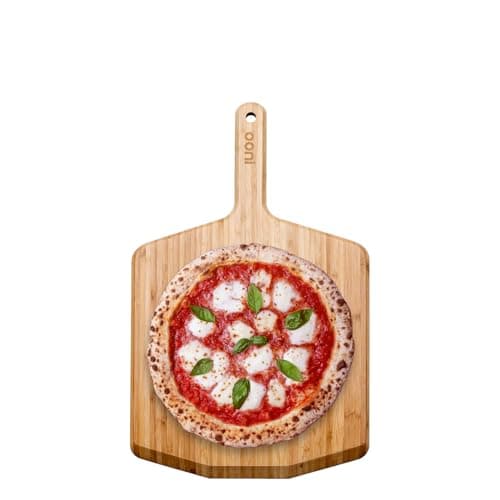
Wood swells when it takes on moisture and shrinks when it loses it, and it does so more across the grain than along it. Wet one face of a board and leave the other dry - which is exactly what happens when you wash a peel and lay it flat on a counter - and the wet face expands while the dry face does not. The board cups, and if the stress is big enough it splits.
Every rule below is a way of avoiding that asymmetry.
Dry it standing up
The single habit that keeps a wooden peel flat
Both faces lose moisture at the same rate, so the board does not cup. Laid flat on a counter, the underside cannot breathe and the top dries first.
The routine
- Scrape it dry first. Most of what is on a peel is flour and dough scraps. A bench scraper takes them off in one pass, and whatever you remove dry is moisture you never introduce.
- Wipe with a barely damp cloth. Damp, not wet. Never soak, never submerge, never leave it in a sink.
- Use soap only where you need it, and only briefly. A mild dish soap on a greasy patch is fine; a full soapy wash is unnecessary and adds water.
- Dry it immediately with a towel, both faces.
- Stand it on edge to air-dry, propped against a wall or hung on a hook, so both faces breathe.
The oil question
Occasionally, and only with food-safe mineral oil - the same thing used on cutting boards. It slows moisture moving in and out, which is the whole point.
Never a cooking oil. Olive, vegetable and seed oils go rancid in wood. They will smell, and eventually the peel will smell of it every time it warms up. Wood is not iron; there is no seasoning to build here.
How often: when water stops beading and starts darkening the surface, which for a peel in weekly use is a few times a year. Thin coat, leave 20 minutes, wipe off everything that has not soaked in.
Things that destroy a wooden peel
The dishwasher. Prolonged hot water plus a heated dry cycle. Bamboo boards come apart at the glue lines; solid wood cups badly. A Richlite-type composite survives it, which is one of the reasons that material exists.
Soaking. Ten minutes in a sink of water puts more moisture into a board than a month of use.
Leaving it in the oven. Obvious with a fire in front of you, less obvious when the oven is off and warm. Wood dries out, shrinks and checks.
Storing it flat under something heavy. A peel that is drying and pressed flat dries into whatever shape it is being held in.
Fixing one that has already cupped
Sometimes, and only for mild cupping. Dampen the concave face lightly, stand the peel somewhere with air on both sides, and let it come back over a day or two as the moisture equalizes. A board that has cupped badly, or split at a glue line, is done - and a cupped peel is worse than no peel, because the base only touches it in the middle.
The composite alternative
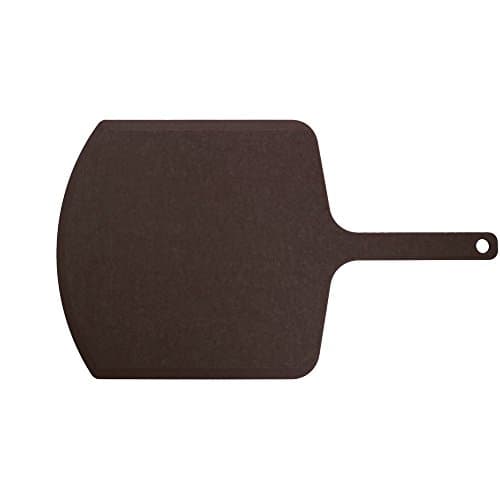
Pressed wood-fiber composite - Richlite and similar - behaves like wood for release and does not warp, is dishwasher-safe, and can be made far thinner at the edge. The trade-offs are weight and a published temperature limit of 350 F. If you have already destroyed one wooden peel, it is the sensible replacement. Comparison in wood versus metal.