The five steps
- Let it cool completely, in the oven. Not on the counter. A hot stone on a cold surface is a crack waiting to happen, and it is the most common way stones die during cleaning rather than during baking.
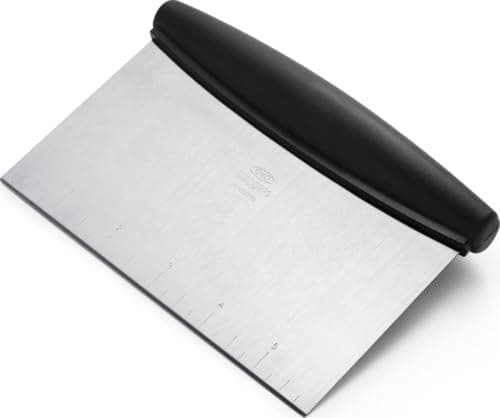
- Scrape the loose material off dry with a stiff plastic or thin steel scraper held nearly flat. Most of what is on the stone is burned flour and it comes off with almost no pressure.
- Brush the dust away with a dry brush, or take the stone outside and knock it off.
- Wipe with a barely damp cloth for anything left. Damp, not wet. No soap.
- Let it dry fully before the next bake, or run the empty oven at 400 F for 20 minutes to drive off whatever moisture went in.
Burned-on cheese, which is the actual question
Cheese that has fused into the surface will not scrape off cold. Two approaches, in order of how much you should like them:
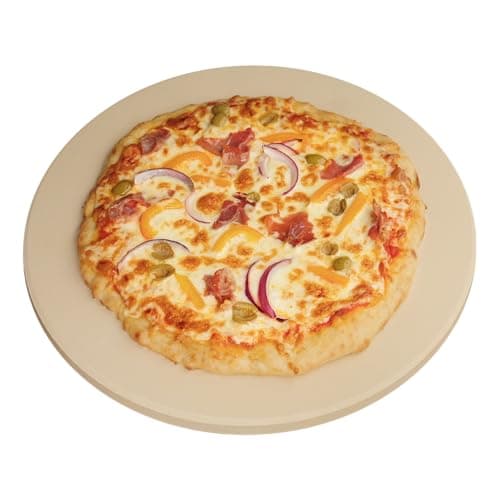
Burn it off. Run the oven at its highest setting with the stone in it for an hour. Sugars and proteins carbonize, and carbon scrapes off in a way that fused cheese does not. Ventilate the kitchen - it will smoke. This is what stones are for; they have published limits of 1450 F and your oven cannot get near it.
Scrape while warm, not hot. At the point the stone is warm to the touch rather than hot, congealed cheese is soft enough to lift with a scraper held flat. Do not try this on a stone that is still hot enough to burn you.
A paste of baking soda and a little water gets circulated as a remedy. It works on the surface, and it also puts alkaline residue into a porous body that then has to bake back out. We would use the oven instead.
Do not do these
Soap. The single worst thing you can do to an unglazed stone. It absorbs the detergent, and detergent smells and tastes come back out of it every time it is hot, for months.
Soak it. Water in the pores becomes steam on the next heat.
Dishwasher. Both of the above at once, plus a thermal cycle.
Steel wool or an abrasive pad. It removes surface material, leaves metal particles in the pores, and achieves nothing the oven would not do better.
Oil it. Ceramic is not iron. Oil soaks in and eventually goes rancid.
The stains are permanent, and that is fine
Every unglazed stone goes brown and then patchy black. That is oil and sugar carbonized into a porous body, and nothing short of removing the surface will take it out. It has no effect on how the stone bakes, and a stone that looks like it has been used for ten years works exactly as well as it did on day one.
The only staining worth acting on is a genuinely greasy patch, because oil that has soaked in will smoke each time. An hour at maximum with the oven empty deals with it.
What about steels and cast iron?
Different rules entirely, because these are seasoned metal rather than porous ceramic. Scrape while warm, wipe with a damp cloth, dry thoroughly, and wipe on the thinnest possible film of oil. Never leave either wet, and never put either in a dishwasher.
Soap is the rule that reverses: forbidden here, and explicitly allowed on a steel by the maker's own instructions. Every published seasoning, cleaning and rust procedure for a plate, plus the contradiction between two of Baking Steel's own pages, is in seasoning and rust on a pizza steel. And if the stone you are cleaning lives in an Ooni or a Gozney rather than an oven, the method is different again - heat and a brush, never water - in how to clean the stone in an outdoor pizza oven.